Knee Arthritis: Symptoms, Causes, Treatment and Recovery

Prof. Dr. Haluk Çabuk

Prof. Dr. Haluk Çabuk

Professor of Orthopedics & Traumatology
Medically Reviewed Updated November 15, 2026 38 min read

Knee arthritis is a common joint condition that causes pain, stiffness, and swelling. It affects the tissues inside the knee joint, including the cartilage that helps bones move smoothly against each other. The condition can develop gradually with age, follow a previous knee injury, or result from an inflammatory disease.

This article explains the main types, causes, symptoms, and treatment options for knee arthritis. It also covers how doctors diagnose the condition, lifestyle changes, helpful exercises, medications, knee replacement surgery, recovery timelines, and ways to slow disease progression. You will also learn when to see a doctor and find answers to common questions.

Book Appointment

Need a personalized treatment plan?

Book a consultation and receive expert orthopedic guidance.

What Is Knee Arthritis?

Knee arthritis affects the tissues inside the knee joint. It can involve the breakdown of cartilage, inflammation of the joint lining, or changes in the underlying bone. These changes may cause pain, stiffness, swelling, and difficulty moving the knee.

Osteoarthritis is the most common type. Other forms include rheumatoid arthritis, psoriatic arthritis, gout, and post-traumatic arthritis. Each type develops differently and may require a different treatment approach.

The symptoms depend on the type of arthritis and how severely the joint is affected. Some people experience mild discomfort, while others develop persistent pain and difficulty with everyday activities.
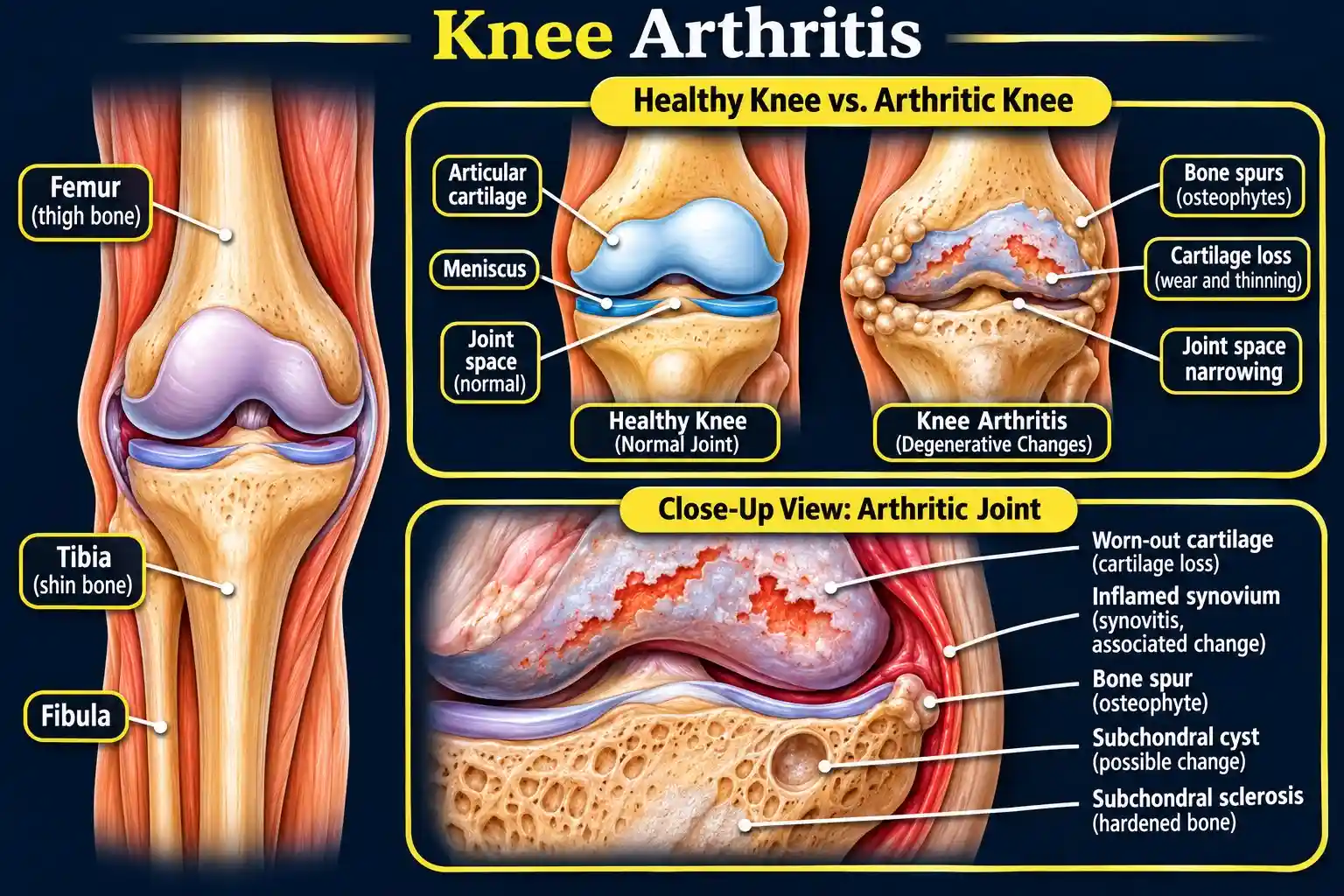
Knee arthritis affecting the knee joint

How Does the Knee Joint Work?

The knee is the largest joint in the human body. It functions primarily as a modified hinge joint, allowing the leg to bend and straighten. It also permits a small amount of rotation during certain movements.

Several bones, cartilage structures, ligaments, and soft tissues work together to support body weight and maintain joint stability.

The Main Structures of the Knee Joint

The knee contains several structures that support movement and joint function:

  • Femur (Thighbone): The femur is the long bone in the thigh. Its lower end forms the upper part of the knee joint and connects with the tibia.
  • Tibia (Shinbone): The tibia is the larger bone in the lower leg. Its upper surface forms the lower part of the main knee joint and supports much of the body's weight.
  • Patella (Kneecap): The patella is a small bone at the front of the knee. It protects the joint and improves the leverage of the quadriceps muscles during knee extension.
  • Articular Cartilage: This smooth tissue covers the ends of the femur, tibia, and underside of the patella. It reduces friction and helps distribute pressure during movement.
  • Menisci: The knee contains two C-shaped structures called the medial and lateral menisci. They help absorb shock, distribute loads, and improve joint stability.
  • Synovial Membrane: This thin tissue lines the inside of the joint capsule and produces synovial fluid.
  • Synovial Fluid: This slippery fluid reduces friction between joint surfaces and helps nourish the articular cartilage.
  • Ligaments: These strong bands connect bones and stabilize the knee. The ACL and PCL control forward and backward movement, while the MCL and LCL help control side-to-side movement.

How These Structures Work Together

The femur, tibia, and patella form the knee's bony framework. Articular cartilage and synovial fluid help the joint surfaces move smoothly. The menisci distribute pressure, while ligaments maintain stability during movement.

These structures allow the knee to support body weight while performing activities such as walking, bending, climbing stairs, and standing. Damage or inflammation affecting them can interfere with normal joint function.

What Are the Different Types of Knee Arthritis?

Several forms of arthritis can affect the knee joint. They differ in their underlying causes and how they affect joint tissues. The main types include:

  1. Osteoarthritis: The most common form of knee arthritis. It develops when joint cartilage gradually breaks down, leading to changes in the underlying bone and surrounding tissues.
  2. Rheumatoid Arthritis: A chronic autoimmune disease in which the immune system attacks the synovial membrane lining the knee joint. This causes inflammation that can damage cartilage and bone.
  3. Post-Traumatic Arthritis: This type develops after a significant knee injury, such as a fracture, ligament tear, or meniscus injury. Joint damage can increase the risk of arthritis later in life.
  4. Psoriatic Arthritis: An inflammatory condition associated with psoriasis. It can affect the knee and cause inflammation that may damage cartilage and bone.
  5. Gout and Pseudogout: These conditions develop when crystals accumulate inside the knee joint. Gout involves uric acid crystals, while pseudogout involves calcium pyrophosphate crystals. Both can cause sudden episodes of joint inflammation.
  6. Juvenile Idiopathic Arthritis: This group of inflammatory conditions affects children whose arthritis begins before age 16 and persists for at least six weeks. It can involve one or multiple joints and requires appropriate medical management.

How Do the Different Types of Knee Arthritis Differ?

The main difference is how each condition develops. Osteoarthritis involves gradual changes in joint cartilage and other tissues. Rheumatoid and psoriatic arthritis involve immune system-related inflammation. Post-traumatic arthritis follows joint injury, while gout and pseudogout result from crystal deposits.

Identifying the specific type helps doctors determine the most appropriate treatment.

What Causes Knee Arthritis?

Knee arthritis can develop through several different processes. Some affect the joint gradually, while others involve inflammation or damage following an injury.

Common contributing factors include:

  • Aging: The risk of knee osteoarthritis increases with age and becomes more common after 45. Age-related changes in joint cartilage and other tissues can contribute to its development. Age alone does not mean that someone will develop arthritis.
  • Previous Knee Injuries: Fractures, ligament tears, meniscus injuries, and dislocations can damage joint structures. These injuries may increase the risk of developing post-traumatic osteoarthritis later in life.
  • Autoimmune Diseases: Rheumatoid arthritis develops when the immune system mistakenly attacks the synovial membrane. Psoriatic arthritis can also trigger inflammation in the knee and other joints.
  • Crystal Deposits: Gout develops when uric acid crystals accumulate inside the joint. Pseudogout occurs when calcium pyrophosphate crystals collect in the joint. Both can trigger episodes of inflammation.
  • Joint Infection: Septic arthritis occurs when microorganisms enter the knee joint and cause an infection. This can rapidly damage joint tissues and requires urgent medical treatment.
  • Excess Body Weight: Carrying excess weight increases mechanical stress on the knee joints. It can contribute to the development and progression of osteoarthritis.
  • Genetic and Structural Factors: Family history and inherited joint characteristics may influence osteoarthritis risk. Abnormal knee alignment, including bowlegs or knock-knees, can also distribute pressure unevenly across the joint.
  • Repeated Joint Loading: Certain occupations and sports involve frequent heavy loading or repetitive knee movements. These activities may increase the risk of joint problems, particularly when combined with previous injuries.

The underlying cause varies according to the type of knee arthritis. Identifying it helps doctors determine which treatment approach is most appropriate.

What Are the Symptoms of Knee Arthritis?

Knee arthritis can cause several symptoms that affect joint movement and everyday activities. The symptoms may develop gradually or appear during flare-ups, depending on the type of arthritis and the extent of joint involvement.

Common symptoms include:

  • Knee Pain: You may experience aching, soreness, or sharp discomfort in or around the knee joint. Pain often becomes worse during or after walking, standing, climbing stairs, or other weight-bearing activities.
  • Stiffness After Rest: Your knee may feel stiff when you wake up or after sitting for an extended period. Osteoarthritis-related stiffness often improves with gentle movement, while inflammatory arthritis may cause longer-lasting morning stiffness.
  • Swelling: The affected knee may appear puffy or enlarged due to fluid accumulation or inflammation inside the joint. Some people also experience warmth around the knee.
  • Reduced Range of Motion: Joint changes and stiffness can make it difficult to bend or fully straighten your knee. You may also struggle with squatting, kneeling, or getting up from a chair.
  • Grinding or Cracking Sensations: You may hear or feel grinding, clicking, or crunching when bending or straightening your knee. This sensation is known as crepitus and commonly occurs with osteoarthritis.
  • Joint Tenderness: The knee may feel sensitive when you press around the joint or affected areas. This tenderness can occur alongside inflammation or other joint changes.
  • Instability or Giving Way: Some people feel that their knee is weak, unstable, or likely to buckle during walking or standing. Pain, muscle weakness, and joint changes may contribute to this sensation.
  • Changes in Joint Shape: Advanced knee osteoarthritis may cause visible changes in joint alignment, such as bowing of the legs.

What Does Knee Arthritis Pain Feel Like?

Knee arthritis pain often feels like a deep, dull ache in or around the knee joint. Its pattern can vary depending on the type and severity of arthritis.

Common pain patterns include:

  • Pain During Activity: Your knee may ache during or after walking, climbing stairs, standing for long periods, or exercising.
  • Stiffness After Rest: Your knee may feel tight or difficult to move after waking up or sitting for an extended period. Gentle movement often eases osteoarthritis-related stiffness.
  • Pain During Weight-Bearing: Standing, walking, squatting, or getting up from a chair may increase discomfort.
  • Pain at Rest: More advanced osteoarthritis can cause discomfort even when your knee is resting. Inflammatory arthritis may also cause persistent pain without physical activity.
  • Changing Pain Intensity: Your symptoms may fluctuate from day to day, with periods of increased discomfort followed by periods of improvement.

Inflammatory arthritis, such as rheumatoid or psoriatic arthritis, may cause prolonged morning stiffness, warmth, and swelling. It can also affect multiple joints.

Knee pain alone cannot confirm arthritis. Other conditions, including meniscus injuries, ligament problems, tendinitis, and bursitis, can cause similar discomfort. A proper medical assessment helps identify the underlying cause.

How Is Knee Arthritis Diagnosed?

Doctors diagnose knee arthritis by reviewing your symptoms, examining the knee, and using imaging or laboratory tests when needed. The evaluation helps identify the type of arthritis and determine whether another condition may be causing your symptoms.

1. Symptom History and Medical Background

Your doctor will ask about your symptoms, when they started, and how they affect your daily activities. They may ask about:

  • The location, severity, and duration of your knee pain.
  • Stiffness after waking up or sitting for long periods.
  • Swelling, warmth, or difficulty moving the knee.
  • Whether pain worsens during physical activity or occurs at rest.
  • Previous knee injuries, surgeries, or a family history of arthritis.
  • Pain or swelling in other joints.

The pattern and duration of your symptoms can provide clues about the type of arthritis. For example, osteoarthritis often causes activity-related pain and brief stiffness after rest. Inflammatory arthritis may cause prolonged morning stiffness and joint swelling.

2. Physical Examination

Your doctor will examine the affected knee and may compare it with the other knee. The examination may include:

  • Swelling and Warmth: Checking for signs of fluid buildup or inflammation.
  • Joint Tenderness: Pressing around the knee to identify painful areas.
  • Range of Motion: Checking how far you can bend and straighten your knee.
  • Crepitus: Feeling or listening for grinding, clicking, or crunching during movement.
  • Joint Alignment: Looking for changes such as bowlegs or knock-knees.
  • Joint Stability: Assessing whether the knee remains stable during movement.

When Do You Need an X-Ray, MRI, or Blood Test for Knee Arthritis?

Your doctor may recommend imaging or laboratory tests based on your symptoms and examination findings. Each test provides different information about the knee joint.

  • Knee X-rays: X-rays are commonly used to assess knee osteoarthritis. Weight-bearing X-rays, taken while you stand, can reveal joint space narrowing, bone spurs (osteophytes), increased bone density, and alignment changes. X-rays do not directly show cartilage, but reduced joint space can indicate cartilage loss.
  • MRI: Magnetic resonance imaging (MRI) provides detailed images of cartilage, menisci, ligaments, bone marrow, and other soft tissues. Your doctor may recommend an MRI when X-rays do not provide enough information or when another problem, such as a meniscus injury, is suspected. MRI is not routinely necessary for every person with knee osteoarthritis.
  • Ultrasound: Ultrasound can detect fluid inside the knee joint and assess inflammation in the synovial membrane. It can also help examine nearby tendons and other soft tissues.
  • Blood Tests: Blood tests may help identify inflammatory or autoimmune conditions. Depending on the suspected diagnosis, your doctor may request rheumatoid factor (RF), anti-CCP antibodies, erythrocyte sedimentation rate (ESR), or C-reactive protein (CRP). Uric acid testing may support an assessment for gout, but its level alone cannot confirm or exclude the condition.
  • Joint Fluid Analysis: If your knee has significant swelling or your doctor suspects gout, pseudogout, or septic arthritis, they may recommend joint aspiration (arthrocentesis). This procedure uses a needle to collect fluid from the knee. Laboratory testing can identify crystal deposits, assess white blood cells, and detect bacteria that may indicate an infection.

Doctors do not need every test to diagnose knee arthritis. Medical history, physical examination, and X-rays are often sufficient to diagnose knee osteoarthritis. Suspected inflammatory arthritis, crystal-related disease, or joint infection may require additional tests.

An accurate diagnosis helps your doctor identify the underlying condition and choose an appropriate treatment plan.

How Is Knee Arthritis Treated?

Knee arthritis treatment aims to relieve pain, maintain joint movement, and improve your ability to perform daily activities. The appropriate approach depends on the type of arthritis, symptom severity, joint damage, overall health, and personal goals.

Doctors usually begin with nonsurgical treatments. These approaches help many people manage their symptoms. Surgery may be considered when other treatments no longer provide sufficient relief.

1. Lifestyle Changes and Weight Management

Daily habits can help reduce stress on the knee and make movement more comfortable. Your doctor may recommend:

  • Weight Management: Losing excess body weight can reduce pressure on the knee joint and improve physical function.
  • Activity Modification: Adjust activities that repeatedly trigger significant pain. Choose lower-impact alternatives when possible.
  • Heat and Cold Therapy: Warm compresses may ease stiffness, while ice packs can help reduce pain and swelling after physical activity.
  • Supportive Devices: A walking stick, suitable footwear, or a knee brace may improve comfort and support movement.

2. Exercise and Physical Therapy

Regular exercise helps strengthen the muscles around the knee, maintain flexibility, and support joint function. A physical therapist can develop an exercise program based on your symptoms and physical abilities.

Common options include:

  • Low-Impact Aerobic Exercise: Walking, swimming, and stationary cycling can improve fitness with relatively little joint impact.
  • Strengthening Exercises: Quadriceps, hamstring, and hip-strengthening exercises help support the knee during movement.
  • Flexibility Exercises: Gentle stretching helps maintain joint movement and reduce stiffness.
  • Balance Exercises: These activities improve stability and may reduce the risk of falls.

Start gradually and adjust the exercise intensity to your comfort level. Modify an activity if it causes sharp pain or significantly increases swelling.

3. Pain Management and Medications

Doctors may recommend medications to control pain and inflammation. The choice depends on your medical history, other medications, and symptom severity.

Common options include:

  • Topical NSAIDs: Gels or creams containing diclofenac can provide localized pain relief. They generally cause less systemic exposure than oral NSAIDs and are commonly used for knee osteoarthritis.
  • Oral NSAIDs: Medications such as ibuprofen or naproxen can reduce pain and inflammation. They may cause stomach, kidney, or cardiovascular side effects, particularly with prolonged use.
  • Acetaminophen (Paracetamol): This medication may provide some pain relief, although its benefits for knee osteoarthritis are often limited.
  • Other Prescription Medications: Doctors may consider additional pain-management options when standard treatments do not provide enough relief.

Do not use pain medications regularly without medical guidance. Supplements such as glucosamine, turmeric, and Boswellia have limited or inconsistent evidence. Discuss their potential benefits and risks with your doctor.

4. Injections for Knee Arthritis

Doctors may consider joint injections when exercise, lifestyle changes, and medications do not provide sufficient relief. The choice depends on your arthritis type and individual circumstances.

Common injection options include:

  • Corticosteroid Injections: These injections reduce inflammation inside the knee and may provide short-term pain relief. Repeated injections require careful consideration because frequent use may affect joint cartilage.
  • Hyaluronic Acid Injections: These injections aim to improve joint lubrication. Research shows inconsistent benefits, and many medical guidelines do not recommend them routinely for knee osteoarthritis.
  • Platelet-Rich Plasma (PRP): This treatment uses concentrated platelets from your own blood. Some studies suggest potential symptom improvement, but the evidence remains variable and medical recommendations differ.

These treatments do not restore lost cartilage or cure arthritis. Your doctor can assess whether an injection is appropriate for your condition.

5. Surgical Treatment for Knee Arthritis

Doctors may recommend an orthopedic surgical assessment when knee pain remains severe despite appropriate nonsurgical treatment. Surgery may become an option when arthritis significantly affects daily activities and joint function.

Possible procedures include:

  • Osteotomy: A surgeon cuts and repositions a bone to redistribute pressure across the knee. This procedure may suit selected younger or more active patients with arthritis affecting one side of the joint.
  • Partial Knee Replacement: A surgeon replaces only the damaged compartment while preserving healthier parts of the knee. This option may suit patients whose arthritis affects only one compartment.
  • Total Knee Replacement: A surgeon replaces the damaged joint surfaces with artificial components. This procedure may be appropriate for advanced arthritis that causes substantial pain and functional limitations.

Knee arthroscopy is not routinely recommended for uncomplicated knee osteoarthritis. Research generally shows that it does not provide lasting benefits for arthritis-related pain.

6. Treatment for Specific Types of Arthritis

Some forms of knee arthritis require treatment that addresses the underlying disease, rather than pain alone.

  • Rheumatoid Arthritis: Doctors may prescribe disease-modifying antirheumatic drugs (DMARDs) or biologic medications to control immune system activity and prevent joint damage.
  • Psoriatic Arthritis: Treatment may include DMARDs, biologic therapies, and other medications that reduce inflammation.
  • Gout and Pseudogout: Doctors manage acute attacks and may recommend long-term treatment to reduce uric acid levels in gout. Pseudogout treatment focuses on controlling inflammation and managing flare-ups.
  • Septic Arthritis: A joint infection requires urgent medical treatment, usually involving antibiotics and drainage of infected joint fluid.

The best treatment plan depends on your arthritis type, symptoms, joint function, and personal goals. Many people manage knee arthritis without surgery through appropriate medical care and nonsurgical treatments. Surgery may be considered when these approaches no longer provide enough relief.

What Lifestyle Changes Help Manage Knee Arthritis?

Small changes to your daily routine can make knee arthritis easier to manage. Focus on habits that reduce unnecessary joint stress, support general health, and help you remain active.

  • Maintain a Healthy Weight: Excess body weight places additional stress on your knee joints. If you are overweight, gradual weight loss may reduce discomfort and improve physical function. Even modest weight loss can benefit people with knee osteoarthritis.
  • Choose a Balanced Diet: Include vegetables, fruits, whole grains, lean proteins, and healthy fats in your meals. A Mediterranean-style eating pattern can support overall health and help with weight management. No specific diet has been proven to reverse cartilage damage or stop osteoarthritis.
  • Use Heat and Cold Therapy: Apply a warm compress before activity to help ease stiffness. An ice pack may help relieve pain and swelling after physical activity. Wrap ice packs in a towel and avoid applying extreme temperatures directly to your skin.
  • Wear Supportive Footwear: Choose comfortable shoes that suit your feet and activities. Your doctor may recommend a knee brace or shoe inserts in selected cases, particularly when joint instability or abnormal loading affects movement.
  • Make Daily Activities Easier: Use handrails when climbing stairs and choose chairs that allow you to stand up comfortably. Avoid repeated deep squatting or prolonged positions that increase knee discomfort.
  • Pace Your Activities: Break demanding tasks into shorter sessions and take breaks when needed. Avoid staying in one position for too long. Adjust activities that repeatedly aggravate your knee.
  • Manage Stress and Sleep Well: Persistent pain can affect sleep and emotional well-being. Mindfulness, deep breathing, and gentle relaxation techniques may help you cope with discomfort. Maintain a regular sleep schedule and a comfortable sleeping environment.

These habits can support long-term symptom management and make daily activities more comfortable. They work best alongside an appropriate medical and exercise plan.

What Exercises Are Best for Knee Arthritis?

The best exercises for knee arthritis combine muscle strengthening, gentle joint movements, and low-impact aerobic activities. These exercises help maintain mobility, improve muscle support, and make everyday movements easier.

Strengthening and Range-of-Motion Exercises

These exercises target the muscles that support your knee and help maintain comfortable joint movement.

  • Quad Sets: Sit or lie down with your leg straight. Place a small rolled towel under your knee. Tighten your thigh muscle and gently press the back of your knee into the towel. Hold for 5–10 seconds, then relax.
  • Straight-Leg Raises: Lie on your back with one knee bent and the other leg straight. Tighten the thigh muscle of your straight leg and slowly lift it about 12 inches off the floor. Lower it gradually.
  • Bridging: Lie on your back with both knees bent and your feet flat on the floor. Tighten your gluteal muscles and lift your hips until your shoulders, hips, and knees form a line. Lower your hips slowly.
  • Sit-to-Stands: Sit on a stable chair with your feet flat on the floor. Lean forward slightly and stand up slowly. Then lower yourself back into the chair with control. Use your hands for support if needed.
  • Heel Raises: Stand behind a sturdy chair and hold it for balance. Slowly raise your heels until you stand on your toes. Lower them gradually to the starting position.
  • Heel Slides: Lie on your back with your legs straight. Slowly slide one heel toward your body by bending your knee. Then slide it back to the starting position. This movement helps maintain knee flexibility.

Low-Impact Aerobic Activities

These activities improve cardiovascular fitness while placing relatively little impact on your knee joints.

  • Walking: Regular walking helps maintain mobility and overall fitness. Start with shorter distances and gradually increase your walking time as your knee allows.
  • Stationary Cycling: Cycling provides aerobic exercise with relatively low joint impact. Adjust the seat height so your knee remains slightly bent when the pedal reaches its lowest position. Begin with low resistance.
  • Swimming and Water Aerobics: Water supports part of your body weight, reducing pressure on painful knee joints. These activities allow you to exercise with less weight-bearing stress.
  • Gentle Yoga and Tai Chi: Depending on your abilities, these activities may improve balance, flexibility, and movement control.

Exercise Considerations for Knee Arthritis

Follow these guidelines to make your exercise routine safer and more comfortable:

  • Start Gradually: Begin with manageable sessions and increase the duration or resistance slowly as your strength improves.
  • Adjust Exercise to Your Pain Level: Mild, temporary discomfort may occur when starting a new activity. Reduce the intensity or modify an exercise if it causes sharp pain or significantly increases swelling.
  • Avoid Complete Inactivity: Prolonged inactivity can contribute to muscle weakness and joint stiffness. Regular, appropriate movement generally supports better physical function.
  • Modify High-Impact Activities: Running, jumping, deep squats, and rapid twisting movements may aggravate symptoms in some people. Adjust these activities according to your comfort.
  • Seek Professional Guidance: A physical therapist can recommend suitable exercises based on your arthritis, joint function, and physical abilities.

Choose activities you can perform comfortably and consistently. A suitable exercise routine can help maintain strength, mobility, and independence over time.

What Medications Help Relieve Knee Arthritis Pain?

Medications can help reduce knee arthritis pain and make daily activities more comfortable. Your doctor will choose an option based on your symptoms, medical history, other medications, and potential side effects.

Common Medication Options

  • Topical NSAIDs: These gels, creams, liquids, or patches are applied to the skin around the knee. Diclofenac is a commonly used example. Topical NSAIDs help reduce pain and inflammation, often with fewer systemic side effects than oral NSAIDs.
  • Counter-Irritant Creams and Gels: Products containing menthol or capsaicin may provide temporary pain relief. Menthol creates a cooling sensation, while capsaicin affects pain-signaling chemicals in the nerves. These products do not treat the underlying joint damage.
  • Acetaminophen (Paracetamol): This medication helps relieve pain but does not reduce joint inflammation. Its benefits for knee osteoarthritis may be limited. Excessive use can damage the liver, particularly when combined with other medicines containing acetaminophen.
  • Oral NSAIDs: Medications such as ibuprofen and naproxen help reduce pain and inflammation. Doctors may recommend them when topical treatments do not provide enough relief. Potential side effects include stomach irritation, ulcers, gastrointestinal bleeding, kidney problems, and cardiovascular complications. Doctors may also prescribe a stomach-protecting medicine, such as a proton pump inhibitor, to reduce the risk of gastrointestinal complications.
  • Prescription Anti-Inflammatory Medicines: Doctors may prescribe medications such as celecoxib when appropriate. These medicines can control pain and inflammation but still carry potential risks. Your doctor will consider your cardiovascular, kidney, and gastrointestinal health before recommending them.
  • Duloxetine: In selected cases, doctors may prescribe duloxetine for persistent osteoarthritis pain. This medication affects pain-processing pathways in the nervous system and may help when other treatments provide insufficient relief.

Important Medication Safety Considerations

Some medications may not be suitable for everyone. For example, oral NSAIDs can pose additional risks for people with kidney disease, stomach ulcers, cardiovascular conditions, or those taking blood-thinning medicines.

Always consult your doctor or pharmacist before starting, combining, or regularly using pain-relieving medicines. They can help you understand possible interactions, side effects, and suitable treatment options.

Medications can help control symptoms, but they do not restore cartilage already lost through arthritis. They are often used alongside exercise, physical therapy, and other recommended treatments.

When Is Knee Replacement Surgery Needed for Arthritis?

Knee replacement surgery may be considered when arthritis causes persistent pain and limits daily activities despite appropriate nonsurgical treatment. The decision depends on how much your symptoms affect your quality of life and whether other treatments provide sufficient relief.

An orthopedic surgeon evaluates your symptoms, physical function, overall health, and imaging results before recommending surgery.

When Might Knee Replacement Surgery Be Considered?

Your doctor may discuss knee replacement if you experience the following problems:

  • Persistent and Severe Pain: You have ongoing knee pain that interferes with daily activities despite appropriate treatment. The pain may occur during movement, at rest, or at night. It may also regularly disturb your sleep.
  • Difficulty With Daily Activities: Knee pain and stiffness make ordinary activities increasingly difficult. You may struggle to walk, climb stairs, stand up from a chair, or perform household tasks.
  • Limited Improvement With Nonsurgical Treatments: Physical therapy, exercise, weight management, activity modification, medications, or injections have not provided sufficient relief.
  • Advanced Joint Damage: Imaging may show substantial cartilage loss, joint space narrowing, bone spurs, or other structural changes associated with advanced osteoarthritis. These findings may support considering surgery when accompanied by significant pain and functional limitations.
  • Joint Deformity or Instability: Advanced arthritis can contribute to changes in knee alignment, such as bowlegs or knock-knees. Some people also experience instability or repeated giving-way episodes that interfere with walking and balance.

What Factors Determine Whether You Need Knee Replacement?

An orthopedic surgeon considers several factors before recommending surgery:

  • Pain and Physical Function: How severe your symptoms are and how much they interfere with everyday activities.
  • Overall Health: Your general medical condition, other health problems, and ability to undergo surgery and rehabilitation.
  • Patient Goals: Your expectations regarding pain relief, mobility, independence, and physical activities after surgery.
  • Clinical Examination: The surgeon assesses knee movement, alignment, stability, and tenderness.
  • Imaging Results: X-rays help identify joint damage and structural changes. Imaging findings alone do not determine whether surgery is necessary.

Surgical assessment does not automatically mean you need knee replacement. The decision should reflect your symptoms, overall health, personal goals, and clinical findings. Some people with advanced X-ray changes manage their condition without surgery, while others experience substantial limitations that justify considering an operation.

How Long Does It Take to Recover From Knee Arthritis Treatment?

Recovery time depends on the treatment, severity of arthritis, overall health, and individual response. Some treatments provide relief within hours or days, while others require several weeks or months to show noticeable improvements.

Nonsurgical treatments generally focus on controlling symptoms and maintaining joint function. Knee replacement involves a longer recovery period with structured rehabilitation.

1. Recovery From Non-Surgical Treatments

Different nonsurgical treatments have different recovery and response times:

  • Hyaluronic Acid Injections: When these injections provide relief, improvement may develop gradually over several weeks. Some patients experience benefits lasting several months, while others notice little improvement. Follow your doctor's instructions about activity after the injection. These injections are not routinely recommended for knee osteoarthritis because research has not consistently demonstrated meaningful benefits.
  • Physical Therapy and Exercise: Initial improvements in pain, flexibility, and muscle strength may appear within a few weeks. Noticeable improvements in mobility and daily function often require several months of consistent exercise.
  • Medications: Pain-relieving medications and anti-inflammatory drugs may begin reducing discomfort within hours or days, depending on the medication. Their effects generally last while the medication is being used.
  • Arthritis Flare-Ups: A temporary increase in knee pain, stiffness, or swelling may improve over several days. Some flare-ups last longer, depending on their cause and severity. Persistent or worsening symptoms require medical evaluation.

2. Recovery After Knee Replacement Surgery

Recovery after partial or total knee replacement generally takes several months. Rehabilitation begins soon after surgery and gradually improves knee movement, muscle strength, and daily function.

The following timeline provides a general overview of recovery after knee replacement:

Recovery stage Typical progress
First 2 weeks You begin walking with assistance and start basic rehabilitation exercises. Swelling and discomfort are common during this period.
Weeks 3–6 Walking, knee movement, and daily independence gradually improve. Some people transition from a walker to a cane. Returning to desk-based work may be possible within this period, depending on recovery and medical advice.
Weeks 6–12 You gradually resume everyday activities, such as shopping and household tasks. Low-impact exercise increases according to rehabilitation progress. Driving may be possible once your surgeon confirms that you can control the vehicle safely.
3–4 months Many people experience substantial improvements in muscle strength, knee movement, and daily function.
6–12 months Strength, comfort, and mobility may continue to improve. Some people still experience occasional swelling or stiffness.

These timeframes are general estimates, not guaranteed recovery milestones. Partial and total knee replacements can involve different recovery experiences. Your progress depends on the procedure, rehabilitation, and overall health.

Follow your surgeon's and physical therapist's instructions throughout recovery. Avoid rushing back into demanding activities before your knee is ready.

Can Knee Arthritis Be Prevented or Its Progression Slowed?

Knee arthritis cannot always be prevented, particularly when age, genetics, or previous injuries contribute to its development. Some risk factors are beyond your control, but certain measures may reduce the likelihood of developing osteoarthritis or help manage an existing condition.

Can Knee Arthritis Be Prevented?

You cannot eliminate every risk factor for knee arthritis. Aging, family history, and biological sex can influence the likelihood of developing osteoarthritis. Women also have a higher risk, particularly after menopause.

You can address some modifiable factors:

  • Prevent Knee Injuries: Use appropriate protective equipment during sports and follow safe exercise techniques. Seek medical assessment after a significant knee injury, as damage to joint structures may increase the risk of post-traumatic osteoarthritis.
  • Maintain a Healthy Weight: Managing excess body weight can reduce mechanical stress on your knee joints and may lower the risk of symptomatic osteoarthritis.
  • Manage Blood Sugar Levels: Diabetes and high blood glucose levels are associated with an increased risk of osteoarthritis. Appropriate diabetes management supports overall metabolic health, although it cannot guarantee protection against knee arthritis.

How Can You Slow the Progression of Existing Knee Arthritis?

If you already have knee osteoarthritis, appropriate management may help control symptoms and preserve joint function. These measures cannot reverse established cartilage damage.

  • Maintain Regular Physical Activity: Consistent, suitable exercise helps preserve muscle strength, joint movement, and physical function. Choose activities that match your abilities and symptoms.
  • Manage Your Weight: If you carry excess weight, gradual weight loss may improve knee pain and physical function. Losing approximately 5%–10% of your body weight can provide meaningful benefits for some people.
  • Use Supportive Devices When Recommended: A walking stick, properly fitted unloader knee brace, or suitable shoe inserts may improve comfort in selected patients. Your doctor can determine whether these devices are appropriate.
  • Manage Pain and Inflammation: Follow your recommended treatment plan to control symptoms. Discuss medication use and repeated corticosteroid injections with your doctor, particularly if you need ongoing pain relief.
  • Follow Treatment for Underlying Conditions: If you have rheumatoid arthritis, psoriatic arthritis, gout, or another inflammatory joint condition, follow your prescribed treatment. Controlling the underlying disease can help reduce inflammation and prevent additional joint damage.

No single measure can guarantee that knee arthritis will not develop or progress. A consistent management plan can help control symptoms, maintain mobility, and support long-term joint function.

When Should You See a Doctor for Knee Pain?

You should see a doctor when knee pain persists, interferes with daily activities, or does not improve with appropriate home care. Medical assessment can help identify the underlying cause and determine whether you need further treatment.

Signs That You Should See a Doctor

Arrange a medical appointment if you experience any of the following:

  • Persistent Pain or Stiffness: Seek medical advice if knee pain lasts several days, repeatedly returns, or gradually worsens. Morning stiffness that does not improve with gentle movement also deserves attention.
  • Difficulty With Daily Activities: Consult a doctor if knee pain makes walking, climbing stairs, squatting, or standing up from a chair difficult.
  • Pain That Disrupts Sleep: See a healthcare professional if knee pain regularly wakes you at night or makes it difficult to fall asleep. Persistent pain at rest may require further evaluation.
  • Mechanical Symptoms: Get your knee examined if you experience repeated catching, locking, or episodes of giving way. These symptoms may indicate arthritis, meniscus injuries, ligament problems, or other joint conditions.
  • Repeated Swelling or Warmth: Seek medical assessment if your knee repeatedly becomes swollen or feels unusually warm. Changes in knee shape or alignment also deserve attention.
  • Symptoms That Do Not Improve With Treatment: If recommended exercises, activity adjustments, or prescribed medications do not provide enough relief, your doctor can reassess your condition and consider other options.

When Should You Seek Immediate Medical Attention?

Some knee problems require urgent medical evaluation. Seek immediate care if you experience:

  • Significant Knee Injury: Severe pain after a fall, collision, twisting injury, or direct impact needs prompt assessment. A popping sound during the injury may indicate significant internal damage.
  • Inability to Bear Weight: Seek urgent care if severe pain or instability prevents you from standing or walking on the affected leg.
  • Visible Deformity: A knee that appears unusually bent, displaced, or dislocated after an injury needs immediate medical attention.
  • Sudden, Severe Swelling: Rapid swelling after an injury may indicate significant internal damage or bleeding.
  • Possible Joint Infection: A hot, red, severely painful, or swollen knee accompanied by fever or chills requires urgent medical evaluation. A joint infection can damage cartilage quickly and needs prompt treatment.

Which Doctor Should You See for Knee Pain?

The appropriate specialist depends on your symptoms and their suspected cause.

  • Primary Care Doctor: A primary care doctor can review your symptoms, examine your knee, and arrange initial investigations. They can also refer you to a specialist when needed.
  • Rheumatologist: A rheumatologist diagnoses and treats inflammatory and autoimmune conditions, including rheumatoid arthritis and psoriatic arthritis. They also manage certain crystal-related joint conditions.
  • Orthopedic Surgeon: An orthopedic surgeon evaluates osteoarthritis, joint damage, previous knee injuries, and structural problems. They can recommend nonsurgical treatments, injections, or surgical options when appropriate.
  • Sports Medicine Specialist: A sports medicine specialist assesses knee pain related to physical activity and sports injuries. They also evaluate problems involving muscles, tendons, ligaments, and other joint structures.

Persistent or worsening knee pain deserves medical attention. Not all knee pain is caused by arthritis, so an accurate diagnosis is essential before choosing a treatment plan.

FAQs About Knee Arthritis

Is All Knee Pain Caused by Arthritis?

No. Knee pain can result from several conditions, including meniscus tears, ligament injuries, tendinitis, bursitis, and joint infections. Arthritis is one possible cause, but a proper medical assessment helps identify the underlying problem.

Does Knee Arthritis Always Get Worse Over Time?

No. Knee arthritis does not progress at the same rate in everyone. Some people experience gradual changes, while others have long periods with stable symptoms. Appropriate management can help maintain mobility and physical function.

Can You Have Knee Arthritis Without Pain?

Yes. Some people have signs of knee osteoarthritis on X-rays without noticeable pain or stiffness. Imaging findings do not always match symptoms, so doctors consider clinical examination and your symptoms when assessing the condition.

Does Knee Arthritis Affect Both Knees?

Yes. Knee arthritis can affect both knees, although one knee may be more severely affected. Previous injuries, joint alignment, and individual differences can influence how the condition develops in each knee.

Is It Too Late to Get Knee Replacement Surgery?

Not necessarily. Age alone does not determine whether someone can undergo knee replacement surgery. Doctors consider pain severity, joint damage, mobility, general health, and how much symptoms affect daily activities.

Can Physical Therapy Help Knee Arthritis?

Yes. Physical therapy can improve muscle strength, flexibility, balance, and joint movement. A physical therapist can also develop an exercise program that matches your symptoms, physical abilities, and treatment goals.

Is Walking Good for Knee Arthritis?

Yes. Walking is generally a suitable low-impact activity for people with knee arthritis. Start with a comfortable distance and gradually increase your walking time. Adjust the activity if it causes significant or persistent discomfort.

What Happens if Knee Arthritis Is Left Untreated?

Knee arthritis may lead to persistent pain, stiffness, reduced mobility, and increasing difficulty with daily activities. The effects vary depending on the arthritis type and severity. Appropriate management can help control symptoms and maintain joint function.

Can Injections Help Knee Arthritis?

Yes. Certain injections may provide temporary symptom relief. Corticosteroid injections can reduce inflammation and pain in some patients. Hyaluronic acid and PRP injections have less consistent evidence of benefit, so discuss their suitability with your doctor.