
Specialties › Shoulder › Rotator Cuff Tear

A rotator cuff tear is one of the most common causes of shoulder pain and weakness. It can happen after a sudden injury, such as a fall, or develop slowly as the shoulder tendons wear down over time. The condition can make everyday tasks like lifting your arm, reaching overhead, getting dressed, or carrying groceries difficult and painful. While some tears remain mild, others can lead to significant loss of shoulder function if left untreated.
This guide explains everything you need to know about rotator cuff tears, including their symptoms, causes, types, risk factors, diagnosis, treatment options, surgery, recovery, possible complications, and prevention. You will also learn when medical evaluation is recommended, what to expect during rehabilitation, and how most people regain shoulder function with the right treatment plan.
Book a consultation and receive expert orthopedic guidance.
A rotator cuff tear is an injury in which one or more of the rotator cuff tendons are partially or completely torn from their attachment to the upper arm bone (humerus). The rotator cuff consists of four muscles and their tendons that stabilize the shoulder and help you lift, rotate, and control your arm. When one of these tendons tears, it can cause shoulder pain, weakness, limited movement, and difficulty with everyday activities such as reaching overhead, lifting objects, or getting dressed.
The rotator cuff includes four muscles, each with a specific role in shoulder movement:
Rotator cuff tears may be partial-thickness, where only some tendon fibers are damaged, or full-thickness, where the tendon is completely detached from the bone. These injuries can result from a sudden injury or gradual tendon wear over time. Early diagnosis and treatment can relieve symptoms, restore shoulder function, and help prevent the tear from getting worse.
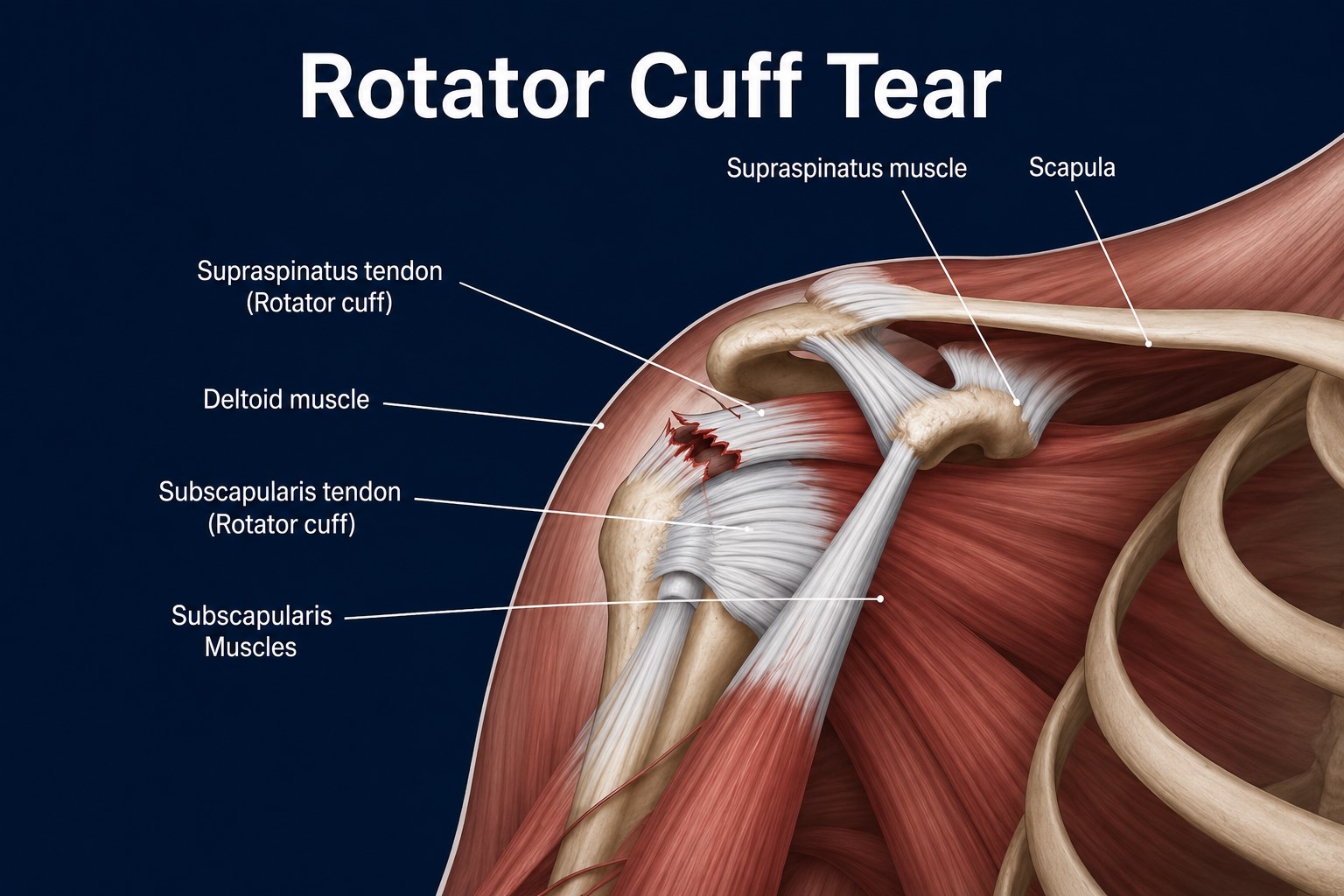
Rotator cuff tears are one of the most common shoulder injuries, affecting more than 2 million people in the United States each year. They become more common with age as the tendons gradually lose strength and flexibility. Studies estimate that about 20% to 25% of adults have a rotator cuff tear, with the rate increasing to 30% to 50% in people over 60 and more than 50% in those over 80.
Many rotator cuff tears develop slowly from everyday wear rather than a single injury. Some people have no symptoms, and the tear is only discovered during imaging for another shoulder problem. Even so, untreated tears can enlarge over time and lead to increasing pain, weakness, and loss of shoulder function.
Rotator cuff tears can occur due to acute injuries or gradual tendon degeneration. While traumatic tears happen after a sudden event, degenerative tears develop over time as the tendons weaken with aging, repetitive stress, and reduced blood supply.
The most common causes of rotator cuff tears are listed below:
Rotator cuff tears are classified according to their severity and cause. They may also be grouped by the size and location of the tear, which helps doctors choose the most appropriate treatment.
The major types of rotator cuff tears are listed below:
The symptoms of a rotator cuff tear may develop suddenly or gradually. An acute tear often causes immediate pain and weakness after an injury, while a degenerative tear usually worsens over time as the tendon becomes more damaged.
The most common symptoms are listed below:
Several factors increase the likelihood of developing a rotator cuff tear. The risk rises with age, repetitive overhead activities, certain occupations and sports, previous shoulder injuries, and medical or lifestyle factors that affect tendon health.
The main risk factors include:
Doctors diagnose rotator cuff tears through a combination of medical history, physical examination, and imaging tests. The goal is to confirm the diagnosis, determine the size and location of the tear, and identify the most appropriate treatment plan.
A typical diagnostic process includes:
Early diagnosis can help relieve pain, preserve shoulder strength, prevent the tear from getting larger, and improve the results of both non-surgical and surgical treatment.
Treatment depends on the size of the tear, symptoms, activity level, and overall shoulder function. Many partial or degenerative tears improve with conservative treatment, while large, traumatic, or full-thickness tears may require surgery. Your doctor will recommend the most appropriate treatment based on your condition and recovery goals.
Non-surgical treatment is often recommended for partial tears, small degenerative tears, or people with manageable symptoms. Common treatment options include:
Surgery may be recommended when conservative treatment does not relieve symptoms or when the tear is large, complete, or caused by a sudden injury. Surgical options include:
Your treatment plan depends on several factors, including the size and type of the tear, the affected tendon, your age, overall health, activity level, symptom severity, imaging findings, and response to conservative treatment. Following the recommended rehabilitation program is essential for reducing pain, restoring shoulder strength, and achieving the best possible outcome.
Surgery may be recommended when non-surgical treatment fails or the tear is large, complete, or caused by a sudden injury. While many partial and degenerative tears improve with conservative care, surgery is often the best option for restoring shoulder strength and function in more severe cases. The decision depends on your symptoms, tear size, activity level, age, overall health, and imaging findings.
Surgery may be recommended if you have:
The surgical approach depends on the size, location, and complexity of the tear.
| Procedure | Best Suited For | Key Advantages |
|---|---|---|
| Arthroscopic repair | Most small, medium, and many large tears | Minimally invasive, smaller incisions, less soft tissue damage, less pain, and faster wound healing. |
| Mini-open repair | Larger or more complex tears | Combines arthroscopy with a small incision for improved access and tendon repair. |
| Open repair | Massive tears, multiple tendon injuries, or revision surgery | Provides the best exposure for complex repairs and reconstruction. |
Some people with irreparable rotator cuff tears may benefit from tendon transfer or reverse shoulder replacement. An orthopedic shoulder specialist will recommend the most appropriate procedure based on your condition, lifestyle, and treatment goals.
Recovery depends on the severity of the tear and the treatment approach. Many people with partial tears recover within a few months with conservative treatment, while recovery after rotator cuff repair surgery typically takes 6–12 months. Following your rehabilitation program is essential for restoring shoulder strength, mobility, and function.
Many partial-thickness and small degenerative tears improve with non-surgical treatment, including physical therapy and activity modification.
| Recovery Stage | Typical Timeline | What to Expect |
|---|---|---|
| Pain control | Weeks 1–2 | Pain and inflammation begin to improve with rest, ice, and medication. |
| Restore mobility | Weeks 2–6 | Physical therapy focuses on improving range of motion and reducing stiffness. |
| Strengthening | Weeks 6–12 | Strengthening exercises help improve shoulder stability and function. |
| Functional recovery | 3–6 months | Most people return to normal daily activities with improved strength and mobility. |
Recovery after surgery occurs in stages to protect the healing tendon while gradually restoring shoulder movement and strength.
| Recovery Phase | Typical Timeline | What to Expect |
|---|---|---|
| Phase 1: Protection | Weeks 0–6 | Wear a sling, manage pain and swelling, and begin supervised passive shoulder exercises. |
| Phase 2: Restore motion | Weeks 6–12 | Gradually remove the sling, begin active shoulder movement, and start gentle strengthening exercises. |
| Phase 3: Strengthening | Months 3–6 | Build strength in the rotator cuff and surrounding muscles while improving shoulder function. |
| Phase 4: Return to activity | Months 6–12 | Continue strengthening and gradually return to work, sports, and other demanding activities with your surgeon's approval. |
Recovery milestones vary depending on the type of work or activity:
Recovery times vary from person to person. Progressing through rehabilitation at the recommended pace helps protect the healing tendon and reduces the risk of re-injury.
Without appropriate treatment, a rotator cuff tear can lead to several complications. As the tendon continues to weaken, the tear may become larger, shoulder function can decline, and long-term joint damage may develop. Early diagnosis, appropriate treatment, and a structured rehabilitation program can help reduce these risks.
Possible complications include:
Prompt evaluation and timely treatment can help prevent these complications, preserve shoulder function, and improve long-term outcomes.
Although not every rotator cuff tear can be prevented, healthy habits can lower the risk of tendon injury. Strengthening the shoulder, improving flexibility, using proper techniques during work and sports, and avoiding repetitive overload can help protect the rotator cuff, especially in athletes, manual workers, and older adults.
The following strategies can help prevent rotator cuff tears:
The cost of rotator cuff tear treatment depends on the severity of the injury, treatment type, hospital, surgeon, and country. Conservative treatment is usually less expensive than surgery, while costs may also include MRI scans, physical therapy, medications, and follow-up care.
It is usually best to avoid sleeping on the injured shoulder, as it can increase pain and inflammation. Sleeping on your back or the opposite side with a pillow supporting the affected arm often provides better comfort.
Some partial-thickness and small degenerative tears can improve with physical therapy, activity modification, and pain management. Full-thickness tears do not heal on their own, although some people can manage symptoms without surgery.
Avoid heavy lifting, repetitive overhead movements, throwing activities, and exercises that increase shoulder pain. Continuing these activities too soon may worsen the tear and delay recovery.
Most people can drive about 6 to 8 weeks after surgery, once they are no longer wearing a sling, have stopped taking opioid pain medication, and have regained enough shoulder strength and control. Always follow your surgeon's advice.
Yes. A repaired tendon can tear again, especially after large tears, another injury, or returning to strenuous activities too soon. Following your rehabilitation program helps lower the risk of a re-tear.
Yes, but only the right exercises. Gentle range-of-motion and strengthening exercises recommended by your doctor or physical therapist can improve recovery. Avoid painful or high-impact shoulder exercises until your provider says they are safe.
Sleeping on your back or the unaffected side with a pillow supporting your arm can reduce pressure on the shoulder. Applying ice before bed, taking prescribed pain medication, and avoiding painful activities during the day may also improve sleep.

We use cookies to improve your experience on our site. By using our site, you consent to cookies.
Manage your cookie preferences below:
Essential cookies enable basic functions and are necessary for the proper function of the website.