
Specialties › Knee & Leg › Muscle Spasms

Muscle spasms are involuntary contractions that cause sudden muscle tightening, cramping, or pain. They can affect different parts of the body, including the calves, thighs, feet, hands, and back. Some occur after strenuous exercise or muscle fatigue, while others develop during rest or sleep. Dehydration, certain medications, and underlying medical conditions may also contribute.
This article explains the different types of muscle spasms, their common causes, and the symptoms they produce. You will also learn how doctors diagnose and treat them, how to relieve a sudden spasm, and what you can do to prevent recurring episodes. We also discuss possible complications and when medical assessment is necessary.
Book a consultation and receive expert orthopedic guidance.
Muscle spasms are involuntary contractions that cause a muscle to tighten without conscious control. They can affect a small area or involve a larger muscle group. Some spasms cause mild discomfort, while others produce sudden, intense pain and make movement difficult.
A spasm occurs when a muscle contracts and does not relax as it should. You may feel tightness, stiffness, or a painful knot in the affected area. The muscle may also become visibly tense or difficult to move.
Muscle spasms can develop during physical activity, after exercise, or while resting. They commonly affect the legs, feet, hands, and back. Some episodes last only a few seconds, while others continue for several minutes.
Most muscle spasms are temporary and improve without medical treatment. Frequent or persistent spasms may need medical assessment, especially when they occur with weakness, numbness, or other unusual symptoms.
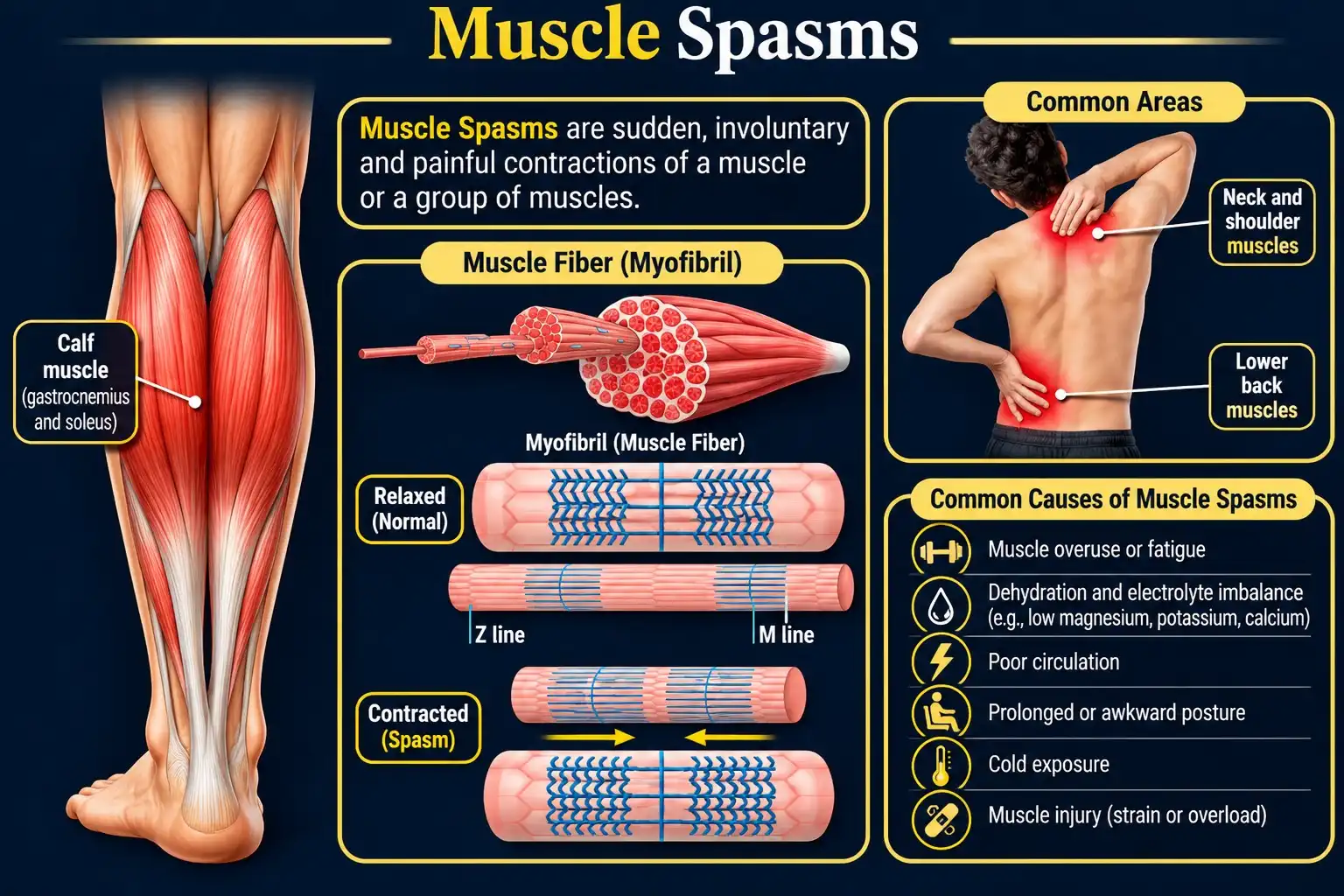
Muscle spasms can take different forms depending on how the muscle contracts and what causes the problem. Some produce painful cramps, while others cause small muscle movements or prolonged stiffness. Understanding these types can help explain the symptoms and identify possible causes.
Muscle cramps are sudden, involuntary contractions that cause pain and tightness. They commonly affect the calf, thigh, foot, or hand. The affected muscle may feel hard or form a noticeable knot. Cramps usually last from a few seconds to several minutes.
Exercise-associated muscle cramps occur during or shortly after physical activity. They often affect muscles that have been working hard, such as the calves, hamstrings, and quadriceps. Muscle fatigue, intense exercise, and fluid or electrolyte losses may contribute to these cramps.
Nocturnal leg cramps develop while you are resting or sleeping. They commonly affect the calf or foot and can cause sudden pain that wakes you up. The affected muscle may remain sore or tender after the cramp has stopped.
Muscle twitching involves small, involuntary movements in a muscle or part of a muscle. These movements may appear as brief ripples or flickers beneath the skin. Unlike painful cramps, twitching usually does not cause the entire muscle to tighten. Fatigue, stress, caffeine, and certain medical conditions may contribute.
Muscle spasticity causes increased muscle tone and stiffness. It can make muscles feel tight and cause movements to become difficult or restricted. Spasticity often occurs when conditions affecting the brain or spinal cord disrupt normal muscle control. Multiple sclerosis and spinal cord injuries are possible causes.
Dystonic contractions occur when muscles contract involuntarily and cause repeated or sustained movements. They may also pull a body part into an unusual position. These contractions can affect the neck, face, hands, or other body areas. Dystonia may cause twisting movements, abnormal postures, or muscle pain.
Tetany involves repeated muscle spasms, cramps, or twitching. It can affect the hands, feet, face, and other muscles. Low calcium levels and certain electrolyte disturbances may trigger these symptoms. Severe cases can cause widespread muscle tightening and require prompt medical assessment.
These types of muscle spasms can have different causes and patterns. Recognizing the type may help a healthcare professional decide whether further evaluation is needed.
Muscle spasms can feel different depending on the affected muscle and the underlying cause. Some cause sudden, sharp pain, while others produce mild twitching or ongoing tightness. You may notice the muscle becoming hard, tense, or difficult to move.
Common sensations and symptoms include:
The symptoms may last from a few seconds to several minutes. Some people also experience lingering soreness after the muscle relaxes.
Muscle spasms can affect different body areas. The location often influences how they feel:
The symptoms can range from mild and temporary to severe and recurring. Pay attention to how often they occur and whether other symptoms develop alongside them.
Muscle spasms can develop for several reasons. Muscle fatigue, dehydration, electrolyte imbalances, and prolonged positions are common triggers. Some spasms are also linked to nerve problems, circulation disorders, medications, or underlying medical conditions.
1. Muscle Fatigue and Overuse: Intense exercise or repeated muscle activity can cause fatigue and increase the risk of spasms. This often happens when you exercise beyond your usual limits or do not allow enough time for recovery. Muscles may also tighten after prolonged physical activity.
2. Dehydration and Fluid Loss: Your muscles need enough fluid to function properly. Dehydration can affect normal muscle activity and contribute to cramps or spasms. Heavy sweating, intense exercise, vomiting, and diarrhoea can increase fluid loss.
3. Electrolyte Imbalances: Electrolytes help regulate muscle contractions and nerve signals. Low or imbalanced levels of potassium, magnesium, calcium, or sodium may contribute to muscle cramps and spasms. These imbalances can develop through fluid loss, certain medications, or medical conditions.
4. Prolonged Sitting or Standing: Staying in one position for a long time can contribute to muscle stiffness and discomfort. Prolonged sitting, standing, or holding an awkward posture may also increase the risk of spasms in the legs, back, and neck.
5. Nerve Compression: Pressure on a nerve can interfere with signals between the nervous system and muscles. Conditions such as a herniated disc or spinal stenosis may contribute to muscle cramps or spasms. Nerve compression can also cause pain, tingling, numbness, or weakness.
6. Circulation Problems: Reduced blood flow can affect the muscles' supply of oxygen and nutrients. Peripheral artery disease (PAD) may cause leg discomfort or cramping, especially during physical activity. These symptoms may improve with rest.
7. Medication Side Effects: Some medications can contribute to muscle cramps or spasms. These include certain diuretics, statins, and blood pressure medications. Some medicines may affect fluid levels or electrolyte balance, while others can influence muscle function directly. Do not stop a prescribed medication without discussing it with your doctor.
8. Pregnancy: Muscle cramps are common during pregnancy, particularly in the legs. Changes in circulation, increased pressure on muscles and nerves, and other physical changes may contribute. These cramps often occur at night.
9. Neurological Conditions: Conditions affecting the brain, spinal cord, or nerves can disrupt normal muscle control. Multiple sclerosis, Parkinson's disease, and dystonia may cause involuntary muscle contractions, stiffness, or spasms.
10. Kidney and Metabolic Disorders: Kidney disease can affect the body's fluid and electrolyte balance. People receiving dialysis may also experience muscle cramps. Thyroid disorders and diabetes can contribute to muscle problems through changes in metabolism, nerve function, or other related effects.
Anyone can experience muscle spasms, but certain factors may increase the likelihood. These include:
Muscle spasms do not always indicate an underlying health problem. Their frequency, severity, location, and associated symptoms can help identify the possible cause.
Doctors usually diagnose muscle spasms by reviewing your symptoms, medical history, and physical examination findings. They may ask when the spasms started, how often they occur, and which muscles they affect. Your answers can help identify possible triggers and underlying conditions.
Your doctor may ask questions about:
These details help your doctor understand the pattern of your symptoms and identify possible causes.
Your doctor may examine the affected muscles and assess how they function. The examination may include:
The findings can help distinguish ordinary muscle cramps from problems involving nerves, muscles, or circulation.
Your doctor may recommend blood tests if your symptoms suggest an electrolyte imbalance or an underlying medical condition. These tests may check:
Not everyone with muscle spasms needs blood tests. Your doctor will select them based on your symptoms and medical history.
Imaging tests may be needed when your doctor suspects a structural problem affecting your muscles, bones, joints, or spine. These may include:
Your doctor may recommend electromyography (EMG) or nerve conduction studies if a nerve or muscle disorder is suspected.
An EMG measures the electrical activity of muscles. Nerve conduction studies assess how electrical signals travel through your nerves. These tests can help identify certain problems affecting muscle and nerve function.
Your doctor will choose diagnostic tests based on your symptoms and examination findings. Many ordinary muscle cramps do not require extensive testing.
Treatment for muscle spasms depends on their cause, severity, and frequency. Most ordinary muscle cramps improve with simple measures such as stretching, massage, and rest. Spasms linked to an underlying medical condition may require additional treatment.
Many mild muscle spasms can be managed at home. The following measures may help relieve discomfort and relax the affected muscles.
1. Gentle Stretching: Stretching can help relax a contracted muscle and reduce cramping. Move slowly and avoid forcing the affected area. For example, gently straightening your leg and pulling your toes toward your shin can help relieve a calf cramp.
2. Massage: Gently massaging the affected muscle may help reduce tightness and discomfort. Use light pressure and stop if the pain increases. Avoid deep massage if you suspect a muscle injury.
3. Rest and Activity Modification: Give the affected muscle time to recover, especially after intense exercise. Temporarily reduce activities that trigger the spasms. You can gradually return to your usual routine as the discomfort improves.
4. Heat and Cold Therapy: Heat may help relax tight muscles and ease stiffness. You can use a warm towel or heating pad for short periods. Cold packs may help reduce pain after strenuous activity or muscle irritation. Wrap ice packs in a towel rather than placing them directly against your skin.
5. Maintain Proper Hydration: Drink enough fluids throughout the day, especially during exercise or hot weather. If you lose substantial fluids through sweating, vomiting, or diarrhoea, replacing fluids and electrolytes may help restore balance.
Your doctor may recommend medication when spasms cause significant discomfort or relate to a specific medical condition.
The appropriate medication depends on the underlying cause and your overall health. Do not start or change medication without medical advice.
Some muscle spasms continue when an underlying problem remains untreated. Your doctor may recommend treatment based on the condition contributing to your symptoms.
For example, treatment may involve correcting an electrolyte imbalance, reviewing medications that contribute to cramping, or managing a nerve or circulation problem. Addressing the underlying cause can help reduce recurring symptoms.
Physical therapy may help when muscle spasms are related to muscle weakness, restricted movement, poor flexibility, or neurological conditions. A physical therapist can recommend exercises and stretching techniques suited to your needs.
Treatment may also include improving posture, strengthening supporting muscles, and restoring normal movement. Your therapist can adjust the programme as your symptoms improve.
Most mild muscle spasms respond to conservative treatment. Frequent, severe, or persistent episodes need medical assessment to identify the cause and guide treatment.
A sudden muscle spasm can cause intense pain and make movement difficult. You can often relieve an ordinary muscle cramp with a few simple steps. The goal is to help the muscle relax without causing further discomfort.
1. Stop the Activity: Stop exercising or doing anything that may be triggering the spasm. Find a comfortable position and allow the affected muscle to relax. Avoid putting extra pressure on the painful area.
2. Gently Stretch the Affected Muscle: Slow, gentle stretching may help release a contracted muscle. For a calf cramp, straighten your leg and pull your toes toward your shin. Hold the stretch gently until the muscle begins to relax. Do not force the movement.
3. Massage the Muscle: Use gentle pressure to massage the affected area. This may help reduce tightness and discomfort. Stop if the massage increases pain.
4. Apply Heat or Cold: A warm towel or heating pad may help relax a tight muscle. If the area feels sore after the cramp, a cold pack wrapped in a towel may help ease discomfort.
5. Replace Lost Fluids: Drink water if dehydration or heavy sweating may have contributed to the cramp. If you have lost substantial fluids through sweating, vomiting, or diarrhoea, replacing electrolytes may also be necessary.
Most ordinary muscle cramps settle within a few minutes. Avoid forceful stretching or massage if you suspect a muscle tear or another injury. Seek medical advice if the pain is severe, does not improve, or occurs with significant swelling, weakness, or numbness.
The duration of a muscle spasm depends on its type, cause, and severity. Most ordinary muscle cramps last from a few seconds to several minutes. Some may continue for 15 minutes or longer, especially when the muscle remains contracted.
After a cramp stops, the affected muscle may feel sore or tender. This discomfort can last for several hours or up to one or two days.
The duration can vary depending on the underlying problem:
Occasional muscle spasms usually improve without medical treatment. Frequent episodes or spasms that persist may need medical assessment to identify the underlying cause. Seek medical advice if they interfere with sleep or daily activities, or occur with significant weakness, numbness, or other unusual symptoms.
You can reduce the risk of muscle spasms by maintaining healthy habits and avoiding common triggers. Staying hydrated, preparing your muscles before exercise, and taking regular movement breaks can help prevent cramps and muscle tightness.
1. Stay Properly Hydrated: Drink enough water throughout the day to maintain normal muscle function. Increase your fluid intake during exercise, hot weather, or activities that cause heavy sweating. Replace fluids lost through vomiting or diarrhoea as needed.
2. Eat a Balanced Diet: Include foods that provide essential minerals for normal muscle function. Potassium, magnesium, calcium, and sodium help regulate muscle contractions and nerve signals. Fruits, vegetables, dairy products, nuts, seeds, and whole grains can help provide these nutrients. Avoid taking electrolyte or mineral supplements unless a healthcare professional recommends them.
3. Warm Up Before Exercise: Prepare your muscles before starting intense physical activity. Begin with light movements and gradually increase your exercise intensity. A proper warm-up helps your muscles adjust to the demands of physical activity.
4. Stretch Regularly: Regular stretching can help maintain muscle flexibility and reduce tightness. Pay attention to the muscles you use most during exercise. Gentle calf and leg stretches before bedtime may also help reduce nighttime leg cramps.
5. Increase Exercise Intensity Gradually: Avoid sudden increases in exercise duration or intensity. Give your muscles enough time to adapt to new activities. Allow adequate recovery between demanding workouts to reduce muscle fatigue and overuse.
6. Take Movement Breaks: Avoid sitting, standing, or staying in the same position for extended periods. Change your position regularly and take short walking or stretching breaks. These habits can help reduce stiffness and discomfort.
7. Adjust Activity in Hot Weather: Hot weather and heavy sweating can increase fluid loss. Reduce exercise intensity when temperatures are high and take regular breaks. Drink enough fluids during and after physical activity.
8. Maintain a Comfortable Sleeping Position: Choose a sleeping position that does not place unnecessary strain on your muscles. Gentle stretching before bed may help if you regularly experience nighttime leg cramps.
9. Review Your Medications: Some medications can contribute to muscle cramps or electrolyte changes. If you experience new or recurring spasms after starting a medication, discuss them with your doctor. Do not stop or change prescribed medication without medical advice.
These habits may help reduce the frequency of muscle spasms. If cramps continue despite preventive measures, a healthcare professional can assess possible underlying causes.
Most muscle spasms are temporary and do not cause lasting problems. Complications are more likely when spasms are frequent, severe, or linked to an underlying medical or neurological condition. Persistent muscle tightness can affect movement, comfort, and daily activities.
Possible complications include:
1. Muscle Shortening and Contractures: Long-term muscle stiffness or spasticity can cause muscles to shorten over time. This may lead to contractures, which restrict joint movement and make it difficult to stretch or move the affected area normally.
2. Reduced Flexibility and Mobility: Frequent or prolonged muscle spasms can make affected muscles feel stiff and less flexible. Severe stiffness may restrict joint movement and interfere with walking, bending, or other everyday activities.
3. Persistent Pain and Discomfort: Repeated muscle contractions can cause ongoing soreness and tenderness. Some people experience discomfort even after the muscle relaxes. Persistent pain may also affect normal movement and daily routines.
4. Sleep Disruption and Fatigue: Muscle spasms that occur at night can interrupt sleep. Repeated episodes may make it difficult to get enough rest, leading to daytime tiredness and reduced concentration.
5. Falls and Movement Difficulties: Severe stiffness or involuntary muscle contractions can affect balance and coordination. This may increase the risk of falls, particularly in people with neurological conditions or limited mobility.
6. Changes in Muscle Tone and Posture: Chronic spasticity or dystonia can cause abnormal muscle tone and involuntary postures. These changes may affect how you stand, walk, or use your arms and legs.
7. Skin and Other Health Problems: People with severe, long-term neurological conditions may develop additional problems related to reduced mobility. These can include pressure sores and, in some cases, bladder or bowel difficulties.
The risk of complications depends on the underlying cause and how long the symptoms continue. Persistent or worsening muscle spasms should be assessed by a healthcare professional.
Most muscle spasms improve with simple home care and do not require medical treatment. You should see a doctor if the spasms occur frequently, cause severe pain, or interfere with your daily activities. A medical assessment can help identify the underlying cause and guide appropriate treatment.
Arrange a medical appointment if you experience:
Some symptoms may indicate a serious condition rather than an ordinary muscle spasm. Seek emergency medical care if you experience:
Do not wait for these symptoms to improve on their own. Seek emergency assessment immediately.
A doctor can assess your symptoms, review possible triggers, and recommend appropriate tests or treatment. Early evaluation can help identify conditions that need specific medical care
Low levels of potassium, magnesium, or calcium may contribute to muscle cramps. Sodium imbalances can also affect normal muscle function. These problems may develop due to fluid loss, certain medications, or underlying medical conditions.
Nighttime muscle cramps often affect the calves and feet during rest or sleep. Muscle fatigue, prolonged positions, and changes in muscle activity may contribute. Some people experience cramps without an identifiable cause.
Stress may contribute to muscle twitching, also called fasciculations. These small, involuntary movements can also occur with fatigue, caffeine, or certain medications. Persistent twitching with progressive muscle weakness needs medical assessment.
A muscle spasm involves an involuntary contraction that causes tightness or cramping. Muscle twitching involves small movements in part of a muscle. Twitching usually does not cause the entire muscle to tighten or produce the same intense pain as a cramp.
Yes. A pinched nerve in the neck or back can sometimes contribute to muscle cramps or spasms. You may also experience pain, numbness, tingling, or weakness in the affected area. Persistent symptoms need medical assessment.
Recurring muscle spasms may be linked to repeated muscle strain, dehydration, medication effects, or an underlying medical condition. Track when they occur and discuss the pattern with your doctor. Medical assessment can help identify the cause.
Yes. Dehydration and imbalances in electrolytes such as potassium, magnesium, calcium, and sodium can affect normal muscle function. Heavy sweating, vomiting, diarrhoea, and certain medical conditions may contribute to these problems.
Sometimes. Frequent or persistent muscle spasms may be associated with nerve compression, circulation problems, kidney disease, diabetes, or neurological conditions. A doctor can assess your symptoms and determine whether further testing is needed.
Most ordinary muscle spasms are temporary and improve with simple care. Frequent, severe, or persistent episodes may need medical assessment. Seek emergency care for spasms accompanied by chest pain, breathing difficulty, sudden one-sided weakness, or severe pain with rapid swelling.