
Specialties › Knee & Leg › LCL Injury

An LCL injury is a knee ligament injury that affects the lateral collateral ligament on the outer side of the knee. This strong band of tissue connects the thighbone to the fibula and helps stabilize the knee during walking, running, and pivoting. The injury can occur after a direct blow, sudden twist, awkward landing, fall, or other force that stretches or tears the ligament.
This article explains everything you need to know about LCL injuries. You will learn what causes them, the three injury grades, common symptoms, how doctors diagnose the damage, and the available treatment options. We also cover non-surgical treatment, when surgery may be recommended, recovery timelines, rehabilitation, injury prevention, and answers to common patient questions.
Book a consultation and receive expert orthopedic guidance.
An LCL injury is a stretch, partial tear, or complete tear of the lateral collateral ligament on the outer side of the knee. The LCL connects the femur, or thighbone, to the fibula, the smaller bone in the lower leg.
The LCL is one of the four major ligaments that support knee stability. It helps prevent excessive outward bending of the knee, known as varus stress. It also supports normal movement during walking, running, and pivoting. The LCL works with other ligaments, including the ACL and PCL, to maintain overall knee stability.
An LCL injury can range from a mild ligament stretch to a complete rupture. Depending on the severity, it may cause outer knee pain, swelling, tenderness, instability, and difficulty walking.
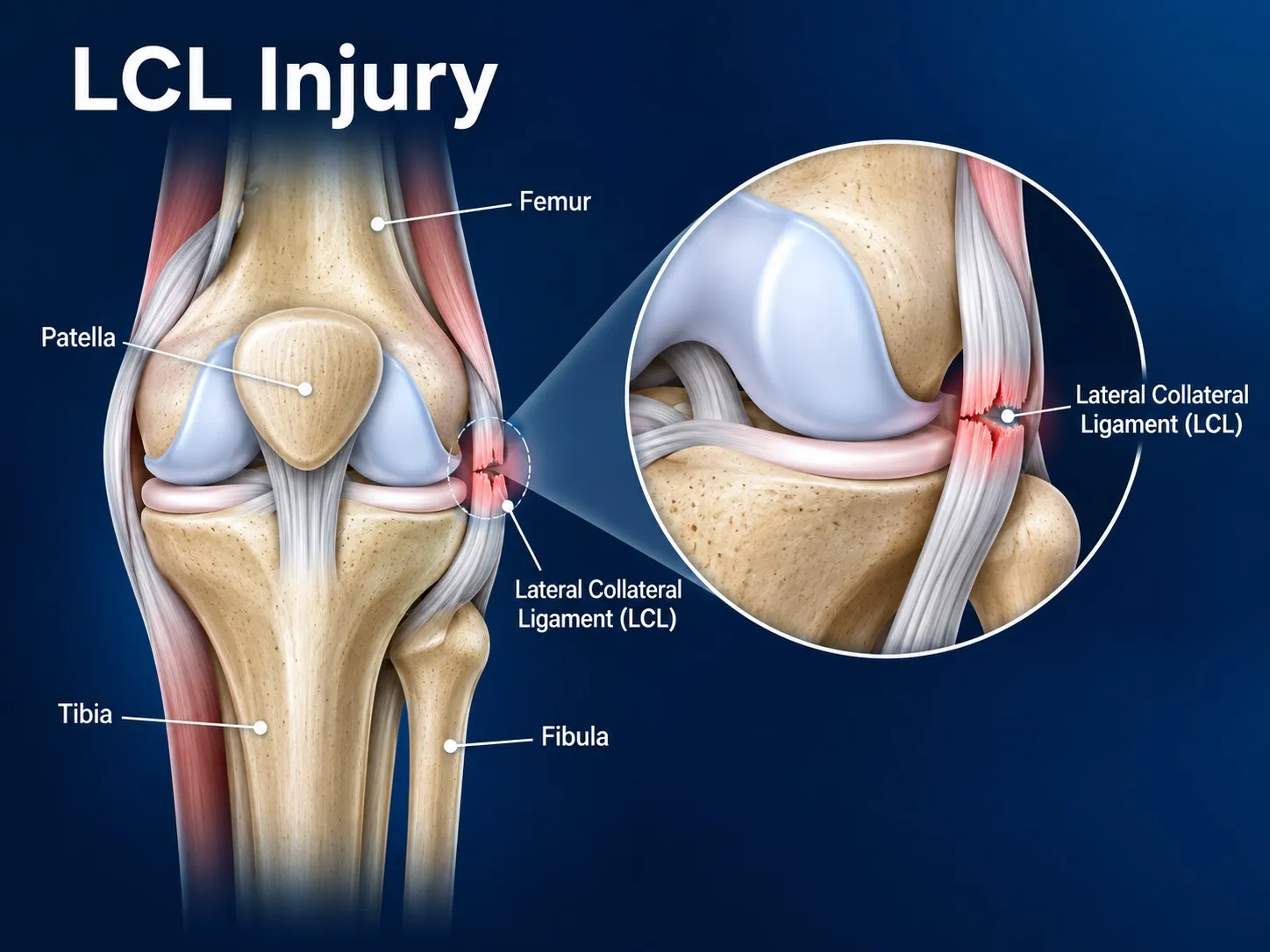
LCL injuries usually occur when excessive force is applied to the inner side of the knee, stretching or tearing the ligament on the outer side. This can happen during sports, falls, accidents, or sudden movements that place abnormal stress on the knee.
The most common causes of LCL injuries are listed below.
A forceful impact can push the knee outward and overstretch or tear the LCL. This commonly occurs in contact sports such as football, soccer, rugby, and hockey.
Sudden twisting or pivoting can sometimes place abnormal stress on the LCL, particularly when combined with other forces or knee injuries.
Football, soccer, basketball, hockey, wrestling, and skiing can increase the risk of LCL injuries. These activities often involve contact, rapid movements, or sudden changes in direction.
Landing off balance after a jump can place abnormal stress on the outer knee. This can occur during basketball, volleyball, gymnastics, and other jumping activities.
A fall can injure the LCL when the knee twists, bends abnormally, or receives a direct impact. Bicycle accidents and similar falls can produce the same forces.
Forcing the knee beyond its normal range of motion can stretch or tear the LCL. High-impact sports and falls can cause this type of injury.
Car and motorcycle accidents can produce enough force to damage the LCL. Severe trauma may also injure other knee ligaments, bones, or soft tissues.
An LCL injury can occur with damage to the posterolateral corner (PLC), ACL, PCL, or meniscus. These combined injuries usually result from higher-energy trauma.
LCL injuries are classified into different grades based on the extent of ligament damage and the degree of knee instability. The grading system ranges from a mild ligament stretch to a complete tear.
The three grades of LCL injuries are described below.
The ligament is stretched but remains intact, with minor damage to its fibers. The knee usually remains stable, with little or no looseness during examination. Mild pain, tenderness, and minimal swelling may occur on the outer side of the knee.
The ligament is partially torn, causing greater pain and some loss of knee stability. Swelling, bruising, tenderness, and difficulty walking may occur. Physical examination may show increased looseness when the knee is tested for side-to-side stability.
The ligament is completely torn or detached from its attachment, causing significant knee instability. Severe pain, swelling, bruising, difficulty bearing weight, and a feeling that the knee may give way can occur. Grade 3 injuries may also involve the ACL, PCL, or posterolateral corner (PLC).
Symptoms of an LCL injury vary depending on the severity of the ligament damage. Mild injuries may cause localized pain and tenderness, while more severe tears can cause swelling, instability, and difficulty walking.
The most common symptoms of an LCL injury include:
Doctors diagnose an LCL injury through a combination of medical history, physical examination, and imaging tests. These methods help determine the severity of the ligament damage and identify other knee injuries.
The doctor asks how the injury happened and reviews symptoms such as pain, swelling, instability, and difficulty bearing weight. The injury mechanism can help identify possible damage to the LCL or other knee structures.
The doctor checks the knee for tenderness, swelling, bruising, range of motion, and instability. They may also compare the injured knee with the uninjured knee.
The doctor applies controlled stress to the knee to assess LCL stability. Pain or increased sideways movement can indicate an LCL injury. The test may be performed with the knee slightly bent and again in full extension.
Doctors may perform additional tests to assess the ACL, PCL, posterolateral corner (PLC), and meniscus. This helps identify injuries that may occur alongside an LCL tear.
X-rays do not directly show ligament tears. They can help identify fractures, bone injuries, or avulsion injuries associated with an LCL injury.
An MRI provides detailed images of the LCL and other soft tissues. It can show whether the ligament is stretched, partially torn, or completely torn and identify associated injuries.
Musculoskeletal ultrasound can sometimes evaluate the LCL and assess ligament movement during stress. Its usefulness depends on the equipment and examiner's experience.
The doctor combines the medical history, examination findings, and imaging results to determine the injury severity and appropriate treatment plan.
Treatment depends on the grade of the injury, associated ligament damage, and the patient's activity level. Doctors consider the degree of ligament damage and knee instability when choosing between non-surgical treatment and surgery.
Treatment options may include:
Avoid activities that increase pain or place stress on the LCL, such as running, jumping, pivoting, and contact sports. Activity can gradually increase as the knee heals.
Ice can help reduce pain and swelling during the early stages. Compression and elevation may also help control swelling.
Healthcare providers may recommend appropriate pain-relieving medicines, such as acetaminophen or certain NSAIDs, based on individual circumstances.
A hinged knee brace can protect the LCL and limit harmful side-to-side movement. Bracing can be useful for moderate or severe injuries.
Crutches may be used temporarily when walking is painful or the knee is unstable. Weight-bearing can gradually increase as symptoms improve.
Rehabilitation helps restore knee movement, strength, balance, and stability. Exercises commonly target the quadriceps, hamstrings, and other muscles supporting the knee.
Surgery may be considered for some Grade 3 injuries, particularly when the ligament has pulled away from its attachment or significant instability remains.
Reconstruction may be recommended when a completely torn LCL cannot be effectively repaired. This is particularly relevant in chronic injuries or cases with persistent instability.
When an LCL injury occurs with ACL, PCL, PLC, meniscus, or other damage, treatment may require additional procedures or coordinated rehabilitation.
The exact treatment plan should be determined after an orthopedic or sports-medicine professional evaluates the injury and knee stability.
Surgery may be recommended for severe or unstable LCL injuries, especially when other knee ligaments are also damaged. The decision depends on the extent and location of the tear, knee stability, associated injuries, activity level, and response to non-surgical treatment.
Surgery may be considered when a complete tear causes significant knee instability. The approach depends on the tear location and quality of the remaining ligament tissue.
Surgery is more likely when an LCL tear occurs with ACL, PCL, or posterolateral corner (PLC) injuries. These combined injuries can cause substantial knee instability.
Surgery may be recommended when the knee continues to give way or remains unstable despite appropriate bracing, activity modification, and physical therapy.
Surgery may be considered when the ligament pulls away from its bone attachment, sometimes taking a small piece of bone with it. The decision depends on the injury's location and displacement.
Patients who continue to experience significant pain, instability, or functional limitations after appropriate rehabilitation may be evaluated for surgery.
Long-standing LCL injuries with persistent instability may require reconstruction when the damaged ligament tissue is no longer suitable for direct repair.
An orthopedic specialist considers several factors before recommending surgery:
Grade 1 injuries and most isolated Grade 2 injuries are generally treated without surgery. Surgical treatment is considered more often for unstable Grade 3 injuries, combined ligament injuries, certain avulsion injuries, or persistent instability after rehabilitation.
Recovery time depends on the severity of the injury and the treatment approach. Mild LCL sprains often recover within a few weeks, while partial tears may take several weeks to a few months. Complete tears and surgically treated injuries can require several months of rehabilitation.
Recovery timelines for different LCL injuries and treatments are given below.
| Injury or Treatment | Typical Recovery Time |
|---|---|
| Grade 1 – Mild sprain | 2–4 weeks |
| Grade 2 – Partial tear | 6–12 weeks |
| Grade 3 – Complete tear, non-surgical | Several months |
| Grade 3 – Surgical repair or reconstruction | 6–12 months for full return to sports |
Grade 1 LCL Injury
A Grade 1 injury involves stretching and minor ligament damage. Most people can return to normal daily activities within 2–4 weeks when pain and stability have improved.
Grade 2 LCL Injury
A Grade 2 injury involves a partial tear and usually needs a longer rehabilitation period. Recovery commonly takes 6–12 weeks, although athletes may need more time before returning to competitive sports.
Grade 3 LCL Injury
A Grade 3 injury involves a complete tear. Recovery varies depending on whether the injury is treated without surgery or requires reconstruction. Non-surgical treatment may require several months of rehabilitation. Persistent instability may require further evaluation.
After LCL repair or reconstruction, rehabilitation generally progresses through several stages:
Return to sports should depend on knee stability, strength, range of motion, and functional testing rather than time alone. Recovery can take longer when the LCL injury occurs with ACL, PCL, PLC, meniscus, or other knee damage.
Although not every LCL injury can be prevented, several strategies can reduce the risk. This is especially useful during sports and activities that involve running, jumping, pivoting, sudden direction changes, or physical contact.
Strengthen the quadriceps, hamstrings, glutes, and calf muscles to improve knee support and stability. Exercises such as squats, lunges, step-ups, and resistance-band exercises can help.
Balance and proprioception training can help your body respond more effectively to sudden changes in movement. Single-leg stands and controlled single-leg exercises can support better stability.
Perform a dynamic warm-up before sports or strenuous activity. Light jogging, leg swings, walking lunges, and sport-specific movements can prepare your muscles and joints.
Learn proper techniques for landing, stopping, pivoting, and changing direction. Maintaining good knee alignment during these movements can reduce unnecessary stress.
Regularly work on flexibility in the quadriceps, hamstrings, calves, hips, and other lower-body muscles. Good mobility can support efficient movement during physical activity.
Choose footwear suitable for your activity and replace worn-out shoes. Athletes involved in contact sports should also use appropriate protective equipment.
Avoid sudden increases in training intensity, running distance, jumping, or practice time. Gradual progression gives muscles and supporting tissues time to adapt.
Complete your rehabilitation before returning to demanding activities. Regain adequate strength, movement, balance, and knee stability before full sports participation.
Athletes can benefit from regular strength, balance, agility, and movement-control exercises. A qualified physical therapist or sports professional can help develop an appropriate program.
No prevention strategy can eliminate the risk of an LCL injury, particularly during unexpected collisions, falls, or other high-impact accidents. Proper conditioning, technique, and gradual training can help reduce the risk.
Walking may be possible with a mild LCL injury, but pain and instability can make weight-bearing difficult. More severe injuries may require temporary crutches and reduced weight-bearing until knee stability and symptoms improve.
Many Grade 1 injuries and isolated Grade 2 LCL injuries are generally treated without surgery. Severe Grade 3 tears, combined ligament injuries, or persistent instability may require surgical evaluation.
Yes, many people can return to sports after appropriate rehabilitation. Return should depend on adequate knee stability, strength, range of motion, and functional testing rather than time alone.
Avoid activities that increase pain or place stress on the LCL, including running, jumping, pivoting, sudden direction changes, and contact sports. Activity can gradually increase as the knee heals and stability improves.
The provided source does not give specific recommendations about sleeping positions or pillow placement after an LCL injury. Sleep comfort may depend on pain, swelling, and the treatment plan prescribed for your injury.
Yes. An LCL injury can occur alongside ACL, PCL, or posterolateral corner injuries, particularly after higher-energy trauma. These combined injuries can cause greater knee instability and may affect treatment decisions.
The long-term outlook depends on injury severity, knee stability, associated injuries, and rehabilitation. Mild injuries often recover with non-surgical treatment, while persistent instability after severe injuries may require further evaluation or reconstruction.