
Specialties › Knee & Leg › Calf Strain

A calf strain is one of the most common lower-leg muscle injuries. It affects the calf muscles at the back of the lower leg, particularly the gastrocnemius and soleus. The injury can happen during sudden movements, such as sprinting, jumping, or changing direction quickly. It can cause mild muscle fiber damage or develop into a more severe partial or complete muscle tear.
This article explains what calf strains are and what causes them. You will learn about the different injury grades, common symptoms, how doctors diagnose them, and the available treatment options. We also cover rehabilitation exercises, recovery timelines, when physical therapy may be necessary, possible complications, ways to prevent another injury, and answers to common patient questions.
Book a consultation and receive expert orthopedic guidance.
A calf strain occurs when muscle fibers in the calf become overstretched or torn, often during sudden movement or forceful activity. It affects one or more muscles at the back of your lower leg, most commonly the gastrocnemius or soleus.
A calf strain is also known as a pulled calf muscle or calf muscle tear. The injury can vary in severity depending on how many muscle fibers are damaged. Mild strains involve minor muscle fiber damage, while more severe injuries can cause a partial or complete muscle tear.
The injury can cause calf pain, tenderness, tightness, swelling, and reduced muscle strength. These symptoms may make everyday activities, such as walking, climbing stairs, running, and pushing off your foot, difficult.
Most mild and moderate calf strains improve with appropriate nonsurgical treatment and progressive rehabilitation. Severe muscle tears may require further medical assessment and, occasionally, surgical treatment.
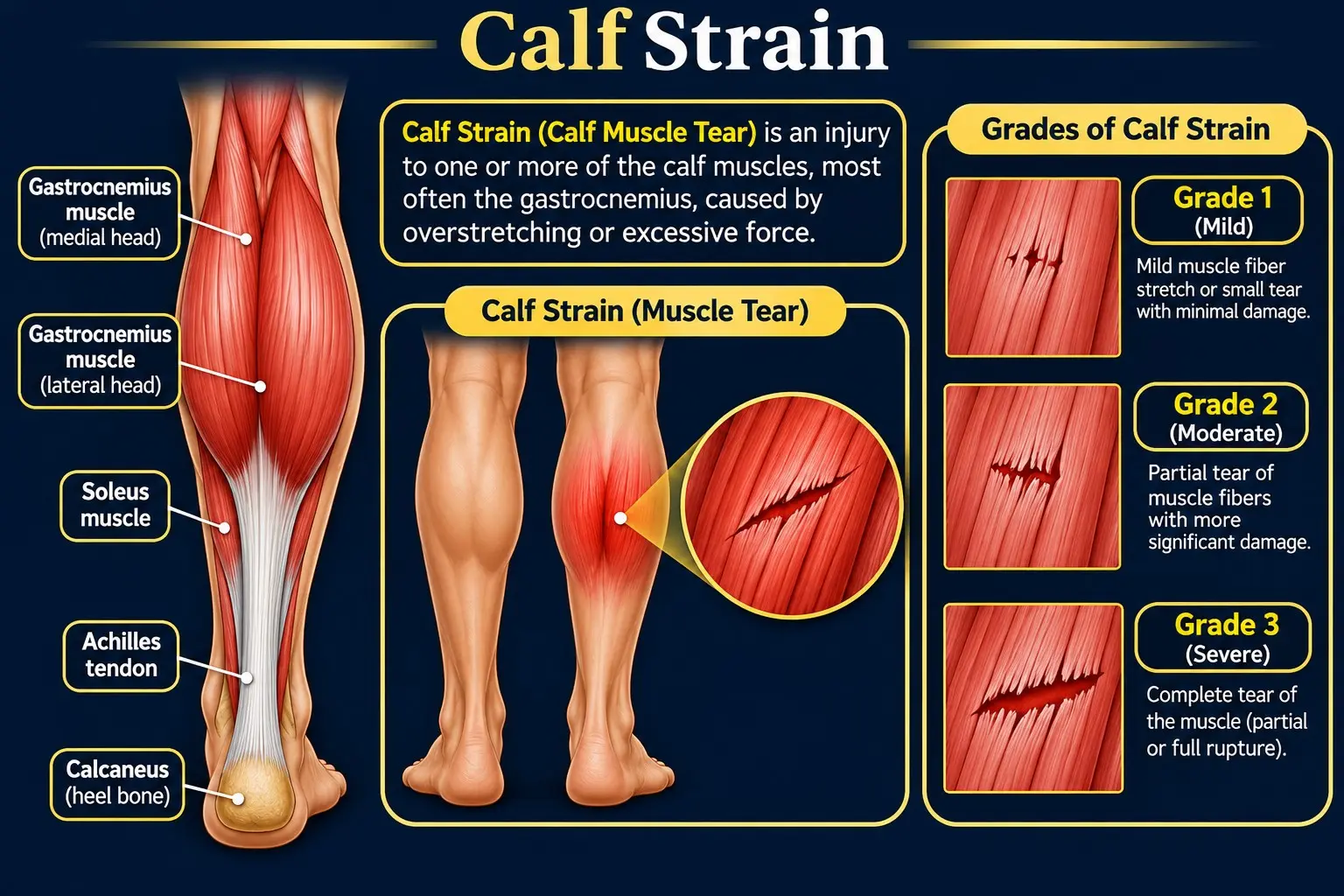
The calf muscles are located at the back of your lower leg, behind the shinbone (tibia). They help control ankle movement and support everyday activities such as standing, walking, running, and jumping.
The main calf muscles include the gastrocnemius, soleus, and plantaris. The gastrocnemius and soleus work together to form the triceps surae. They connect to the heel bone through the Achilles tendon.
The three main muscles associated with the calf are:
The calf muscles work together to control movement and support your body during different activities:
The calf muscles work together, but they do not perform exactly the same functions. A calf strain may affect the gastrocnemius, soleus, plantaris, or more than one muscle. The location and severity of the injury can influence your symptoms and ability to move normally.
A calf strain often occurs when the calf muscles are overloaded during acceleration, jumping, sudden changes of direction, or forceful push-off. These movements place high demands on the gastrocnemius and soleus muscles, particularly when they contract forcefully or stretch beyond their normal range.
The injury develops when muscle fibers become overstretched or contract under excessive force. This can cause minor muscle fiber damage or a partial or complete tear.
Common causes and contributing factors include:
Calf strains can develop suddenly or gradually. Acute injuries usually occur during a specific movement, such as sprinting or jumping. Gradual-onset injuries may develop after repeated muscle loading without adequate recovery.
A calf strain can affect anyone, but certain factors may increase the likelihood of injury. These include previous muscle injuries, inadequate conditioning, training changes, and activities that place high demands on the calf muscles.
Common risk factors include:
Some activities place greater demands on the calf muscles because they involve repeated loading, explosive movements, or sudden changes in direction.
Having these risk factors does not mean you will definitely develop a calf strain. Your injury risk depends on several factors, including previous injuries, muscle conditioning, training habits, recovery, and the physical demands of your activities.
A calf strain can cause sudden pain in the back of the lower leg, tenderness, swelling, and difficulty walking or pushing off the foot. Symptoms may develop immediately during the injury or become more noticeable over the following hours.
The type and severity of symptoms depend on how much muscle damage has occurred. Common symptoms of a calf strain include:
Calf strain symptoms vary depending on the affected muscle and the extent of tissue damage. Mild injuries may cause only slight pain and tightness, while more severe tears can cause significant bruising, weakness, and difficulty bearing weight.
Severe pain, significant muscle weakness, extensive swelling, or an inability to walk warrants prompt medical assessment. These symptoms may indicate a more serious muscle injury or another condition affecting the lower leg.
Calf strains are classified into three grades based on the extent of muscle damage and its effect on strength and movement. The grading system helps doctors understand the severity of the injury and determine an appropriate treatment and rehabilitation plan.
The three grades of calf strains are:
The severity of a calf strain is determined through clinical assessment of your symptoms, muscle strength, movement, and physical examination. Ultrasound or MRI may help confirm the extent of muscle damage when necessary.
A doctor can usually diagnose a calf strain through your injury history and a physical examination. They will ask how the injury happened, when symptoms started, and which movements make the pain worse.
During the examination, the doctor may:
Most calf strains do not require imaging tests for diagnosis. A doctor may recommend imaging when the injury is severe, the diagnosis is uncertain, or symptoms do not improve as expected.
Common imaging tests include:
Your doctor will choose the appropriate tests based on your symptoms and examination findings. An accurate diagnosis helps determine the injury's severity and guide your treatment plan.
Treatment for a calf strain depends on the severity of the injury and your symptoms. Most mild and moderate strains improve with nonsurgical treatment and a gradual rehabilitation program.
The main goals are to reduce pain and swelling, protect the injured muscle, restore movement, and rebuild strength. Returning to normal activities too quickly can increase the risk of another injury.
During the first 24–72 hours after a calf strain, focus on protecting the injured muscle and managing pain and swelling. Avoid activities that increase calf pain, including running, jumping, and forceful push-offs.
You can help manage symptoms through the following measures:
After this initial period, continue protecting the injured muscle and gradually restore movement as your symptoms allow. Avoid returning to strenuous activities while walking or basic calf movements remain painful.
Once the initial pain and swelling begin to settle, gradual movement helps restore normal calf function. Your doctor or physiotherapist can guide you through exercises based on your injury severity and recovery progress.
Rehabilitation usually progresses from gentle ankle movements to more demanding strengthening exercises. The aim is to restore flexibility, muscle strength, and the ability to tolerate everyday activities.
Some people may also benefit from a temporary heel lift. This raises the heel slightly and reduces the stretch placed on the calf muscle during walking. A healthcare professional can advise whether it is appropriate for your injury.
Most calf strains heal without surgery. Severe injuries involving complete or near-complete muscle tears may require assessment by an orthopedic or sports medicine specialist.
Surgery is occasionally considered for selected severe tears. The decision depends on the location and extent of the damage, functional limitations, and individual circumstances.
Calf rehabilitation exercises help restore ankle movement, muscle strength, and functional ability. The appropriate exercises depend on the injury grade and your stage of recovery.
A physiotherapist may introduce exercises gradually, starting with gentle movements and progressing as your symptoms improve.
Common rehabilitation exercises include:
Your physiotherapist may gradually increase the difficulty of these exercises as your strength and tolerance improve. Later stages may include functional activities that prepare you for running, jumping, and sports.
Do not start or progress exercises based only on a fixed timeline. Your symptoms, strength, and ability to perform each movement should guide rehabilitation. Stop an exercise if it causes sharp pain or significantly worsens your symptoms.
Physical therapy can help restore calf strength, flexibility, movement, and function after a muscle strain. Many mild injuries improve with basic care and gradual activity. Moderate and severe strains may need a more structured rehabilitation program.
A doctor or physiotherapist may recommend physical therapy in the following situations:
A physiotherapist assesses your calf strength, ankle movement, flexibility, and functional ability. They then develop a rehabilitation program based on your injury severity and recovery progress.
Your program may include:
The goal is to restore normal calf function and reduce the risk of another strain. Your return to activity should depend on your strength, symptoms, and ability to perform functional movements rather than time alone.
The recovery time for a calf strain depends on the severity of the injury, the amount of muscle damage, and your rehabilitation progress. Mild strains usually heal faster, while severe tears can take several months to recover.
The approximate recovery timelines for different calf strain grades are:
Several factors can influence how quickly your calf muscle heals:
These timelines are approximate. Your actual recovery may be shorter or longer depending on the injury and your individual progress.
Most calf strains heal with appropriate treatment and rehabilitation. However, some injuries can lead to complications, particularly when muscle damage is severe or recovery is incomplete.
Possible complications include:
Not all calf pain and swelling result from a muscle strain. Other conditions, including deep vein thrombosis (DVT), Achilles tendon injuries, and compartment syndrome, can cause similar symptoms.
Seek prompt medical assessment if you experience:
Seek emergency medical care if you develop chest pain, shortness of breath, or cough up blood. These symptoms may indicate a pulmonary embolism, which can occur when a blood clot travels to the lungs.
Early assessment helps identify serious conditions and ensures you receive appropriate treatment.
You can reduce the risk of another calf strain by improving muscle strength, maintaining flexibility, and managing your training load. Proper preparation and recovery also help protect your calf muscles during physical activity.
The following measures can help prevent future injuries:
If you have experienced repeated calf strains, consider getting a professional assessment. Identifying underlying strength or movement problems can help reduce the risk of another injury.
A calf strain involves overstretched or damaged muscle fibers. A calf tear means some or all muscle fibers have torn. Both terms describe the same type of injury, but the severity can vary.
Yes. Most mild calf strains heal with activity modification and gradual rehabilitation. Moderate and severe tears may require medical assessment and structured treatment.
Avoid forceful stretching during the early stages of recovery. Gentle ankle movements may help maintain mobility. Introduce calf stretching gradually as symptoms improve.
Ongoing pain may result from incomplete healing, muscle weakness, stiffness, or returning to intense activities too early. Persistent or worsening pain needs medical assessment.
A pulled calf muscle usually causes sudden pain, tightness, or a sharp pulling sensation. Some people feel a popping sensation when injured. Severe tears may cause significant bruising, swelling, and difficulty walking.
Mild strains may allow walking with some discomfort. Moderate and severe injuries can make walking difficult. Avoid running while it causes pain, and return gradually as your strength and function recover.
You can return to running and sports when your calf has regained adequate strength and function. You should be able to walk normally and perform heel raises without significant pain. Start with light running and gradually progress to sprinting and sport-specific activities.