
Anterior Hip Replacement: Procedure, Benefits, Risks, Recovery and Long-Term Results

Prof. Dr. Haluk Çabuk

Prof. Dr. Haluk Çabuk

Professor of Orthopedics & Traumatology
Medically Reviewed Updated August 22, 2026 12 min read

Anterior hip replacement is a modern technique used to treat severe hip pain and restore movement when the hip joint has been damaged by arthritis, injury, or other conditions. During the procedure, an orthopedic surgeon replaces the worn joint with artificial components through an incision at the front of the hip. This method, also called the direct anterior approach (DAA), is designed to reach the hip by working between natural muscle planes, helping preserve important muscles and soft tissues.

This guide explains everything you need to know about anterior hip replacement, including who may benefit from the procedure, how the surgery is performed, its potential advantages and risks, recovery milestones, rehabilitation exercises, implant longevity, and ways to protect your new hip after surgery. It also answers common patient questions to help you make informed decisions and understand what to expect before, during, and after treatment.

Book Appointment

Need a personalized treatment plan?

Book a consultation and receive expert orthopedic guidance.

What Is Anterior Hip Replacement?

Anterior hip replacement is a type of total hip replacement in which an orthopedic surgeon replaces a damaged hip joint through an incision at the front of the hip. Also called the direct anterior approach (DAA), this procedure removes the worn ball-and-socket joint and replaces it with a hip prosthesis to relieve pain, restore mobility, and improve hip function. It is commonly recommended for people with advanced hip damage when non-surgical treatments no longer provide enough relief.

The direct anterior approach differs from traditional hip replacement techniques in the way the surgeon reaches the hip joint. Instead of cutting through major muscles or tendons, the surgeon works between natural muscle planes to access the joint. This muscle-sparing technique is designed to preserve the surrounding soft tissues whenever possible, which may reduce tissue damage during surgery and support an earlier return to movement.

Many patients experience less pain during the early recovery period, begin walking sooner, and regain daily function more quickly after anterior hip replacement. Still, this approach is not suitable for everyone. The best results depend on factors such as your anatomy, overall health, the severity of joint damage, accurate implant placement, and following your rehabilitation program after surgery.
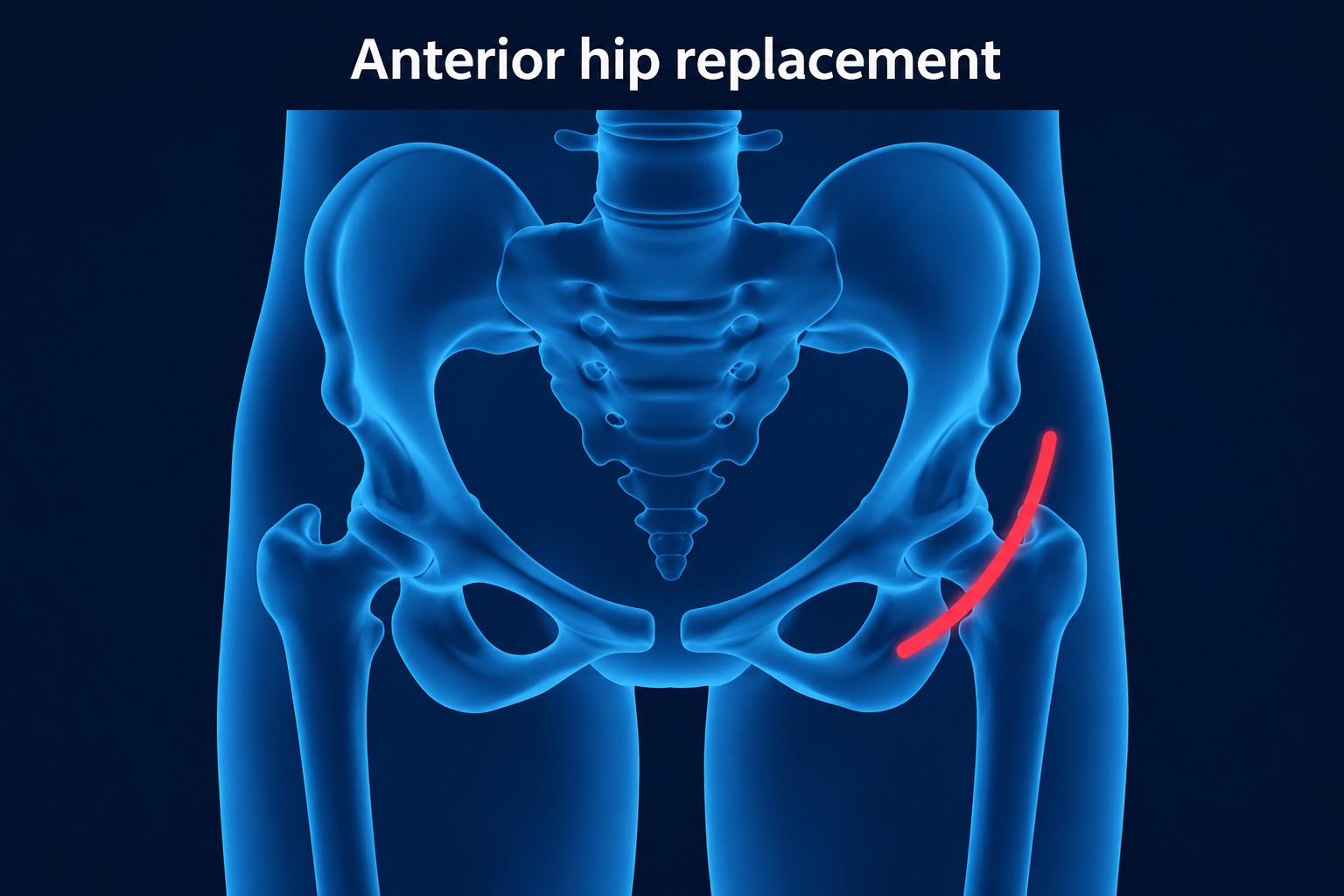
Anterior hip replacement anatomy diagram

Who Needs Anterior Hip Replacement?

Anterior hip replacement may be recommended for patients with severe hip joint damage that causes persistent pain, stiffness, and reduced mobility despite appropriate non-surgical treatment. The goal of the procedure is to relieve pain, restore hip function, and help patients return to everyday activities with greater comfort. The most common conditions requiring anterior hip replacement are listed below.

  1. Advanced hip osteoarthritis: The most common reason for hip replacement. Cartilage gradually wears away, causing bone-on-bone friction, chronic pain, stiffness, and limited movement.
  2. Rheumatoid arthritis: Ongoing inflammation damages the hip joint over time, leading to pain, swelling, stiffness, and loss of function.
  3. Hip dysplasia: An abnormally formed hip joint can wear out earlier than normal, resulting in progressive arthritis and chronic hip pain.
  4. Avascular necrosis: Loss of blood supply to the femoral head can cause the bone to collapse, leading to severe joint damage.
  5. Post-traumatic arthritis: Arthritis that develops after a hip fracture, dislocation, or other serious injury may eventually require joint replacement.
  6. Severe hip pain with limited mobility: Surgery may be considered when pain makes it difficult to walk, climb stairs, put on shoes, or perform other daily activities.
  7. Failure of conservative treatment: Hip replacement may be recommended when physical therapy, medications, activity modification, or injections no longer provide meaningful symptom relief.

Not everyone who needs a hip replacement is a candidate for the direct anterior approach. Your orthopedic surgeon will review your medical history, imaging results, hip anatomy, body size, bone quality, previous hip surgeries, and overall health to determine whether anterior hip replacement is the safest and most effective option for your condition.

Who Is a Good Candidate for Anterior Hip Replacement?

The ideal candidate for anterior hip replacement usually has advanced hip joint damage, persistent symptoms that have not improved with conservative treatment, and good overall health. While the direct anterior approach offers several potential benefits, it is not the right choice for every patient. Your orthopedic surgeon will carefully assess your condition to determine whether this technique is the safest and most effective option.

Patients who may be good candidates include:

  1. People with advanced hip arthritis: Severe osteoarthritis, rheumatoid arthritis, post-traumatic arthritis, or avascular necrosis that causes ongoing pain and limits daily activities.
  2. Patients who have not responded to non-surgical treatment: Physical therapy, medications, activity modification, weight management, or injections no longer provide adequate relief.
  3. Active individuals: People who want to return to daily activities and low-impact exercise after recovery may benefit from the muscle-sparing approach.
  4. Patients with a healthy or moderate BMI: A lower body mass index and favorable body anatomy may make the procedure technically easier and improve surgical access.
  5. People with good bone quality: Healthy bone provides stable support for the hip implant and contributes to long-term success.
  6. Patients in good overall health: Well-controlled medical conditions reduce surgical risks and support a smoother recovery.
  7. People without complex hip anatomy or extensive previous surgery: Individuals without severe deformities or significant scar tissue are often better candidates for the anterior approach.

There is no specific age limit for anterior hip replacement. Younger adults, middle-aged individuals, and older adults may all be suitable candidates if they have severe hip damage and are medically fit for surgery. Your surgeon will consider factors such as your symptoms, imaging findings, bone quality, BMI, activity level, medical history, and hip anatomy before recommending the most appropriate surgical approach.

How Is Anterior Hip Replacement Performed?

During anterior hip replacement surgery, the surgeon replaces the damaged hip joint through an incision at the front of the hip while working between natural muscle planes instead of routinely cutting through major muscles. This muscle-sparing approach is designed to preserve healthy soft tissues, improve joint function, and support an earlier recovery. The main stages of anterior hip replacement surgery are outlined below.

  1. Anesthesia is administered: You receive general or spinal anesthesia to keep you comfortable throughout the procedure. Some patients also receive a nerve block to help control pain after surgery.
  2. The patient is positioned: You are usually placed on your back on a standard operating table or a specialized orthopedic table that helps position the leg during surgery.
  3. An anterior incision is made: The surgeon creates a small incision at the front of the hip to access the joint while minimizing disruption to the surrounding tissues.
  4. The hip joint is exposed: The surgeon carefully works between natural muscle planes to reach the hip joint without routinely detaching major muscles or tendons.
  5. The damaged joint is removed: The worn femoral head, damaged cartilage, and diseased bone from the hip socket are removed while preserving as much healthy bone as possible.
  6. The hip implant is inserted: An acetabular cup is placed into the hip socket, followed by a liner. A femoral stem and artificial femoral head are then inserted into the thighbone to recreate the ball-and-socket joint.
  7. Implant position is checked: The surgeon assesses hip stability, leg length, and implant alignment. In many cases, fluoroscopy (real-time X-ray imaging) is used to improve the accuracy of implant placement.
  8. The incision is closed: The surgical site is cleaned, the incision is closed with sutures, staples, or surgical adhesive, and a sterile dressing is applied.

After surgery, you are monitored in the recovery area before beginning rehabilitation. Most patients stand and take their first steps with the help of a physical therapist on the same day or within 24 hours. Early walking helps improve circulation, lowers the risk of blood clots, and supports a faster return to daily activities.

What Are the Advantages of Anterior Hip Replacement?

The anterior approach offers several potential advantages compared with traditional hip replacement techniques. By reaching the hip joint through the front and preserving major muscles whenever possible, this technique may reduce soft tissue damage and support an earlier return to daily activities. The major benefits of anterior hip replacement include.

  1. Less muscle damage: The surgeon works between natural muscle planes instead of routinely detaching major muscles, helping preserve muscle function.
  2. Less pain after surgery: Reduced soft tissue disruption may lead to less pain during the early stages of recovery and decrease the need for strong pain medication.
  3. Faster early recovery: Many patients begin walking sooner and regain independence more quickly than with some traditional approaches.
  4. Improved mobility: Preserving muscles may make it easier to walk, climb stairs, get in and out of bed, and perform everyday activities during rehabilitation.
  5. Lower risk of certain dislocations: Keeping many of the stabilizing tissues around the hip intact may reduce the risk of posterior hip dislocation.
  6. Fewer movement restrictions: Some patients have fewer precautions after surgery, although they should always follow their surgeon's specific recommendations.
  7. More accurate implant positioning: Many surgeons use fluoroscopy during the procedure to help optimize implant alignment and leg length.
  8. Shorter hospital stay: Depending on overall health and recovery progress, many patients return home the same day or within 24 hours.
  9. Excellent long-term outcomes: When performed by an experienced orthopedic surgeon, anterior hip replacement provides reliable pain relief, improved hip function, and long-lasting results comparable to other surgical approaches.

Although these benefits are well recognized, they vary from one patient to another. Your anatomy, overall health, the severity of joint damage, and your surgeon's experience all influence the outcome. The best surgical approach is the one that offers the safest procedure and the most predictable long-term result for your individual condition.

What Are the Disadvantages and Risks of Anterior Hip Replacement?

Although anterior hip replacement offers many advantages, it also has potential limitations and risks. Like any major operation, this procedure carries general surgical risks as well as some challenges that are specific to the direct anterior approach. Most complications are uncommon, especially when the surgery is performed by an experienced orthopedic surgeon and followed by appropriate postoperative care. Possible disadvantages and risks are listed below.

  1. Technically demanding procedure: The anterior approach provides a smaller surgical field and requires specialized training and experience to achieve accurate implant placement.
  2. Not suitable for every patient: People with severe obesity, complex hip deformities, extensive scar tissue, previous hip surgery, or poor bone quality may benefit more from a different surgical approach.
  3. Nerve injury: The lateral femoral cutaneous nerve can become irritated during surgery, causing numbness, tingling, burning, or altered sensation along the outer thigh. In many cases, these symptoms improve over time.
  4. Femoral fracture: A fracture can rarely occur while preparing the thighbone for the implant, particularly in patients with osteoporosis or fragile bone.
  5. Wound complications: Delayed wound healing, drainage, or superficial infection may develop, especially in patients with deep skin folds or certain medical conditions.
  6. Infection: Although uncommon, infections can occur around the incision or the artificial joint and may require antibiotics or additional surgery.
  7. Blood clots: Deep vein thrombosis (DVT) and pulmonary embolism are rare but serious complications. Early walking, blood-thinning medications, and compression devices help lower this risk.
  8. Implant-related problems: Over time, the artificial hip may loosen, wear out, become unstable, or require revision surgery.
  9. Leg length difference: Despite careful measurements and the use of fluoroscopy, a small difference in leg length can occasionally occur after surgery.
  10. General surgical risks: Bleeding, anesthesia-related complications, blood vessel injury, stiffness, persistent pain, and other medical complications remain possible with any major joint replacement.

Most patients recover without serious complications and experience significant pain relief and improved mobility. Your overall health, bone quality, hip anatomy, and your surgeon's expertise all influence the risk of complications. Following your rehabilitation program and attending regular follow-up visits also play an important role in achieving a successful long-term outcome.

Anterior Hip Replacement vs Posterior Hip Replacement: What Are the Differences?

The main difference between anterior and posterior hip replacement is the surgical approach used to access the hip joint. In the anterior approach, the surgeon reaches the hip through an incision at the front and usually works between natural muscle planes. In the posterior approach, the incision is made at the back of the hip, and some muscles and tendons are temporarily released to reach the joint. Both procedures use similar hip implants and provide excellent long-term pain relief and function when performed by an experienced orthopedic surgeon.
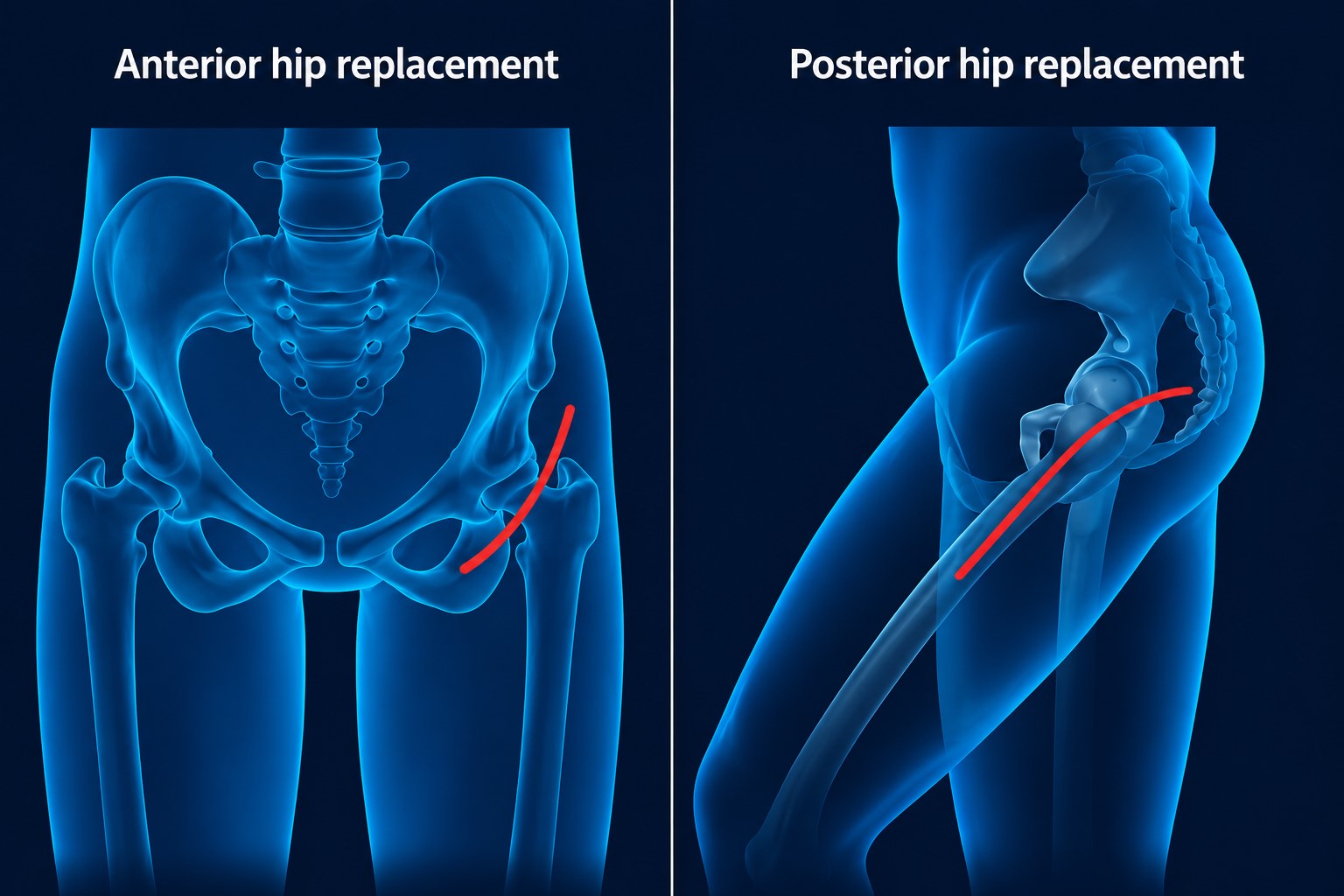
Anterior vs posterior hip replacement comparison
Feature Anterior Hip Replacement Posterior Hip Replacement
Incision location Front (anterior) of the hip Back (posterior) of the hip
Muscle involvement Usually works between natural muscle planes with minimal muscle disruption Often requires temporary release and repair of some muscles and tendons
Early recovery Many patients walk sooner and return to daily activities earlier Recovery is excellent, but early rehabilitation may be slightly slower while muscles heal
Pain after surgery May result in less pain during the early recovery period Early discomfort may be slightly greater because of muscle repair
Dislocation risk Generally associated with a lower risk of posterior hip dislocation Slightly higher early dislocation risk, although the overall risk remains low with modern techniques
Rehabilitation precautions Often involves fewer movement restrictions, depending on the surgeon's protocol Temporary precautions, such as avoiding excessive hip bending or crossing the legs, are more commonly recommended
Surgical complexity More technically demanding and may use fluoroscopy to assist implant positioning Provides wider surgical exposure and is suitable for a broad range of patients
Long-term outcomes Excellent pain relief, restored mobility, and durable implant survival Similar long-term pain relief, function, and implant longevity

Although the anterior approach may offer advantages during the early stages of recovery, research shows that long-term pain relief, hip function, and implant survival are generally comparable between the two techniques. The most appropriate approach depends on your hip anatomy, overall health, medical history, and your surgeon's experience rather than the location of the incision alone.

How Long Does It Take to Recover from Anterior Hip Replacement?

Recovery after anterior hip replacement generally occurs in several stages. Most patients begin walking within 24 hours of surgery and gradually return to normal activities over the following weeks. While the direct anterior approach may support a faster early recovery for many people, complete healing and maximum improvement in strength, flexibility, and function usually take 6 to 12 months.

Recovery Stage What You Can Expect
Day of surgery to 24 hours Most patients stand and walk with a walker or crutches, begin gentle exercises, and may return home the same day or within 24 hours.
Week 1 Pain and swelling gradually improve. Walking distance increases, and physical therapy focuses on restoring movement and preventing stiffness.
Weeks 2–6 Many patients transition from a walker to a cane or independent walking, resume light household activities, and may return to desk work if approved by their surgeon.
Weeks 6–12 Most patients walk comfortably without assistive devices, regain hip strength and flexibility, resume driving when medically cleared, and return to low-impact activities such as walking, swimming, cycling, and golf.
Months 3–6 Strength, endurance, and balance continue to improve. Many people return to more physically demanding work and recreational activities with their surgeon's approval.
Months 6–12 Soft tissues continue to heal, the new hip feels more natural, and most patients achieve their maximum recovery and long-term function.

Recovery time varies from one person to another. Your age, overall health, bone quality, muscle strength before surgery, body weight, commitment to physical therapy, and any postoperative complications can all influence how quickly you recover. Following your rehabilitation plan, staying active with appropriate exercises, and attending follow-up appointments give you the best chance of achieving a smooth recovery and long-lasting results.

What Rehabilitation Exercises Are Recommended After Anterior Hip Replacement?

Rehabilitation exercises help restore hip strength, mobility, and function after surgery. Most patients begin gentle movements on the day of surgery or within 24 hours under the guidance of a physical therapist. As healing progresses, the exercises become more challenging to improve balance, walking, and overall hip function. The following exercises are commonly recommended during recovery.

  1. Ankle pumps: Move your feet up and down several times each hour while awake to improve blood circulation, reduce swelling, and lower the risk of blood clots.
  2. Quadriceps sets: Tighten the muscles at the front of your thigh, hold for a few seconds, and relax to improve leg strength and knee stability.
  3. Gluteal sets: Squeeze your buttock muscles to strengthen the hip extensors and support walking.
  4. Heel slides: Slowly slide your heel toward your buttocks while lying down, then straighten your leg to improve hip and knee flexibility.
  5. Walking program: Begin with short, frequent walks using a walker or crutches as instructed, then gradually increase your distance as your strength improves.
  6. Standing hip abduction: Move the operated leg gently to the side while holding a stable surface to strengthen the hip muscles and improve balance.
  7. Standing hip extension: Move the operated leg backward without leaning forward to strengthen the gluteal muscles and improve walking mechanics.
  8. Standing marches: Lift one knee at a time while standing to improve coordination, balance, and hip flexor strength.
  9. Sit-to-stand exercises: Practice standing up from a chair with minimal arm support to build lower-body strength and improve independence.
  10. Step-ups and low-impact conditioning: Once approved by your healthcare team, exercises such as step-ups, stationary cycling, swimming, and gentle balance training help improve endurance, mobility, and long-term hip function.

You should perform rehabilitation exercises exactly as recommended by your orthopedic surgeon or physical therapist. Increasing activity too quickly or attempting advanced exercises before your hip has healed can delay recovery or increase the risk of complications. A gradual, consistent rehabilitation program provides the best opportunity to regain strength, restore mobility, and return to everyday activities safely.

How Long Does an Anterior Hip Replacement Last?

Modern hip implants are designed to last for many years, although longevity depends on several factors. Most anterior hip replacements continue to function well for 20 to 25 years or longer, and many last 30 years or more in appropriately selected patients. The lifespan of the implant depends more on the quality of the implant, surgical technique, and patient-related factors than on the anterior approach itself.

Studies have shown excellent long-term outcomes for modern hip replacements. More than 95% of implants remain functional 10 years after surgery, while approximately 90% to 95% continue to perform well at 15 to 20 years. Most patients never require revision surgery, especially those who undergo hip replacement later in life and follow their surgeon's recommendations for long-term care.

Several factors influence how long an anterior hip replacement lasts:

  1. Age at surgery: Younger patients often place greater demands on the implant over a longer period.
  2. Activity level: Low-impact activities help preserve the implant, while repetitive high-impact sports can increase wear.
  3. Body weight: Maintaining a healthy weight reduces stress on the artificial hip.
  4. Implant materials: Modern implants use durable materials that are designed to minimize wear and improve longevity.
  5. Surgical technique: Accurate implant positioning improves stability and helps reduce long-term complications.
  6. Bone quality and overall health: Healthy bones, strong muscles, and well-managed medical conditions contribute to better long-term outcomes.

Although revision surgery is uncommon, it may become necessary if the implant wears out, loosens, becomes infected, or the surrounding bone is damaged. You can help extend the life of your hip replacement by maintaining a healthy weight, staying active with low-impact exercise, completing your rehabilitation program, preventing falls, avoiding smoking, and attending regular follow-up visits with your orthopedic surgeon.

How Can You Protect Your New Hip After Surgery?

Protecting your new hip after surgery helps maximize implant longevity and supports a smooth recovery. Following your rehabilitation plan, maintaining a healthy lifestyle, and taking steps to prevent complications can improve hip function and reduce the risk of future problems. The practical recommendations below can help protect your new hip after surgery.

  1. Follow your rehabilitation program: Complete your prescribed physical therapy sessions and home exercises to rebuild strength, flexibility, and balance.
  2. Stay active with low-impact exercise: Activities such as walking, swimming, cycling, and golf help maintain joint health without placing excessive stress on the implant.
  3. Avoid high-impact activities: Running, jumping, contact sports, and heavy lifting may increase implant wear and should only be performed if approved by your surgeon.
  4. Maintain a healthy weight: Keeping your weight within a healthy range reduces stress on the artificial hip and may improve its lifespan.
  5. Prevent falls: Wear supportive footwear, remove tripping hazards at home, and use walking aids until your healthcare provider advises they are no longer needed.
  6. Care for your incision: Keep the surgical wound clean and dry, and follow your surgeon's instructions until it has fully healed.
  7. Reduce the risk of infection: Practice good dental hygiene, treat infections promptly, and inform healthcare providers that you have a hip replacement before invasive procedures.
  8. Take medications as prescribed: Use pain medication, blood thinners, and other prescribed medicines exactly as directed.
  9. Use proper body mechanics: Avoid sudden twisting movements, increase activity gradually, and follow any temporary movement precautions recommended by your surgeon.
  10. Attend regular follow-up appointments: Routine check-ups allow your orthopedic surgeon to monitor healing, evaluate the implant, and detect potential problems early.
  11. Know when to seek medical attention: Contact your healthcare provider if you develop increasing pain, persistent swelling, redness, wound drainage, fever, calf pain, or difficulty bearing weight.

Most patients enjoy excellent long-term results after anterior hip replacement by combining healthy lifestyle habits with regular follow-up care. Staying active, protecting your new joint from unnecessary stress, and following your surgeon's advice can help your hip replacement provide reliable pain relief and improved mobility for many years.

FAQs About Anterior Hip Replacement

What is the cost of anterior hip replacement?

The cost of anterior hip replacement varies depending on the country, hospital, surgeon, implant type, and treatment package. Insurance coverage, hospital stay, diagnostic tests, anesthesia, and rehabilitation services can also affect the total price. Ask your healthcare provider for a detailed estimate and check what your insurance plan covers before scheduling surgery.

Can I sit cross-legged after anterior hip replacement?

Most patients should avoid sitting cross-legged during the early healing period unless their surgeon advises otherwise. As your muscles and soft tissues recover, some people regain enough flexibility to sit this way safely. Your surgeon or physical therapist will let you know when it is appropriate based on your recovery and hip stability.

When can I drive after anterior hip replacement?

You can usually drive once you are no longer taking opioid pain medication, have good control of your leg, and can react quickly in an emergency. Many patients return to driving within two to six weeks, although recovery varies depending on whether the right or left hip was replaced and your surgeon's recommendations.

Can I travel by airplane after anterior hip replacement?

Many patients can travel by air within a few weeks after surgery if their recovery is progressing well. For long flights, your surgeon may recommend walking periodically, staying hydrated, wearing compression stockings, and performing simple leg exercises to reduce the risk of blood clots. Always discuss your travel plans before flying.

Can I sleep on my side after anterior hip replacement?

Sleeping on your side is often possible after the initial healing period, but the timing depends on your recovery and your surgeon's advice. Many patients are encouraged to place a pillow between their knees for added support and comfort while the soft tissues continue to heal.

What activities should I avoid after anterior hip replacement?

High-impact activities such as running, jumping, and contact sports are generally discouraged because they can increase stress on the implant and shorten its lifespan. Most patients are encouraged to choose low-impact exercises like walking, swimming, cycling, and golf to maintain fitness while protecting their new hip.

Will my hip implant trigger airport metal detectors?

Yes, a hip implant can sometimes trigger airport metal detectors since it contains metal components. Airport security staff are familiar with joint replacements, and additional screening is usually quick and routine. Carrying documentation about your implant is optional, as it is rarely required.

Can anterior hip replacement wear out over time?

Yes. Although modern hip implants are highly durable, they can gradually wear over many years of use. Factors such as your age, activity level, body weight, implant materials, and overall health influence how long the implant lasts. Regular follow-up visits help identify any signs of wear before they become serious problems.