
Specialties › Knee & Leg › Meniscus Tear

A meniscus tear is one of the most common knee injuries. It affects the meniscus, a C-shaped piece of cartilage that cushions and stabilizes the knee joint. The injury can happen after a sudden twist during sports or develop gradually as the cartilage weakens with age.
This guide explains everything you need to know about meniscus tears. You will learn what causes them, the different types, common symptoms, how doctors diagnose the injury, and the available treatment options. We also cover recovery timelines, when surgery may be necessary, whether a torn meniscus can heal without surgery, possible complications, ways to reduce your risk of another injury, and answers to common patient questions.
Book a consultation and receive expert orthopedic guidance.
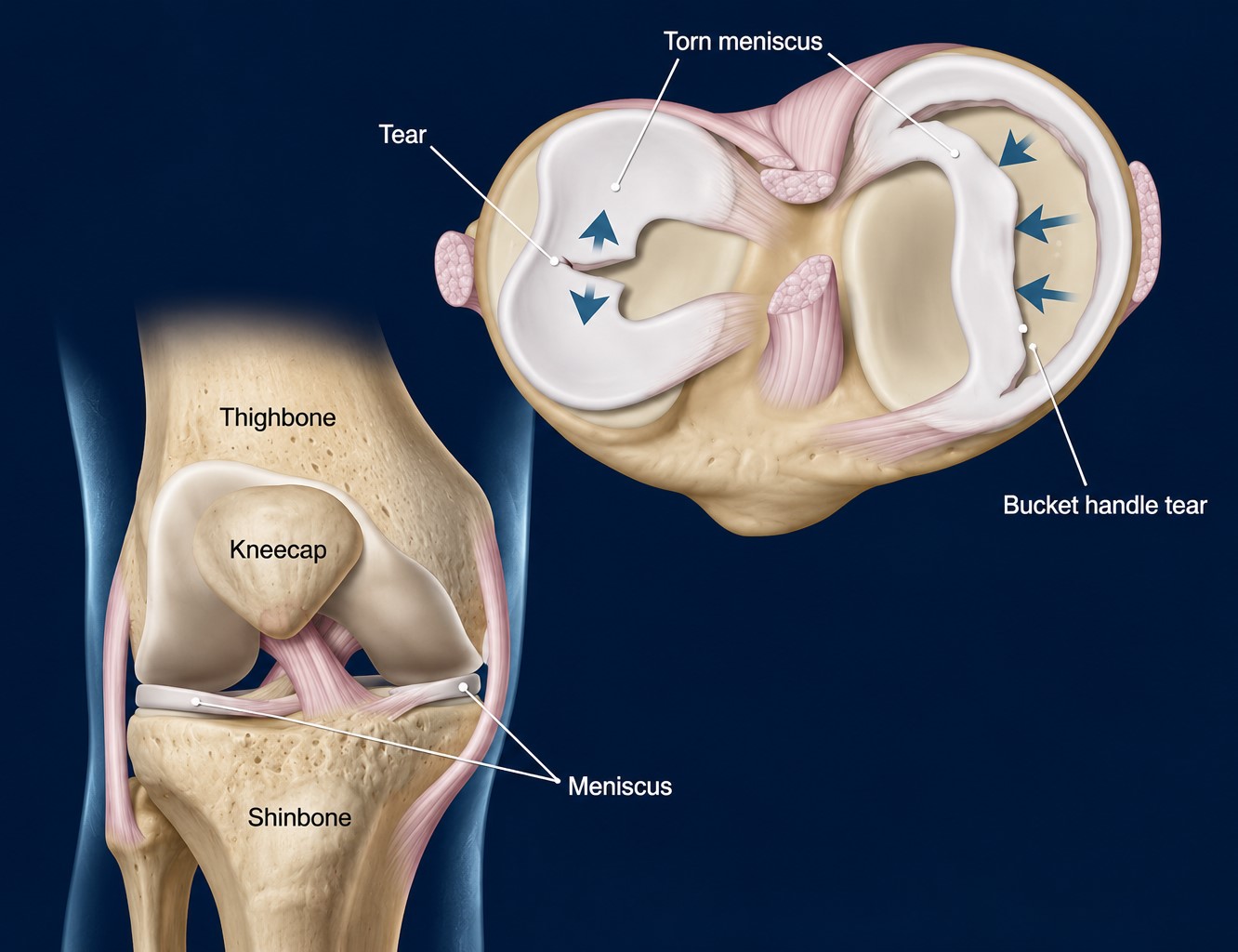
A meniscus tear is a common knee injury that occurs when one of the knee's two C-shaped cartilage pads becomes damaged. These pads, called the menisci, sit between the thighbone (femur) and the shinbone (tibia). They act as natural shock absorbers, helping spread body weight evenly across the knee while improving stability and protecting the smooth articular cartilage that covers the ends of the bones.
Each knee has two menisci. The medial meniscus is located on the inner side of the knee, while the lateral meniscus sits on the outer side. The medial meniscus is attached more firmly to surrounding structures, making it less mobile and more likely to tear. The lateral meniscus moves more freely, so it is injured less often.
A meniscus tear often happens during activities that involve twisting or pivoting on a planted foot. It can also develop gradually as the cartilage weakens with age or repeated stress. Depending on the type and location of the tear, you may experience knee pain, swelling, stiffness, clicking, catching, or a locking sensation that limits normal movement.
Early diagnosis and appropriate treatment play an important role in protecting the knee. Many tears improve with non-surgical care, while others require surgery to restore knee function and reduce the risk of long-term joint damage.
Meniscus tears are among the most common knee injuries, affecting approximately one million people in the United States each year. They occur in people of all ages and are a leading cause of knee pain and orthopedic consultations. Research estimates that diagnosed meniscus injuries occur at a rate of about 61 cases per 100,000 people each year, although the true number is likely higher because many mild or degenerative tears remain undiagnosed.
The risk varies with age and activity level. Traumatic tears are more common in younger athletes who participate in sports involving twisting, pivoting, or sudden changes in direction. Degenerative tears are more common in adults over 40 as the meniscus gradually weakens with age. The medial meniscus is injured more often than the lateral meniscus, and the risk is higher in people with knee osteoarthritis, previous ligament injuries, or occupations that involve frequent squatting, kneeling, or heavy lifting.
The most common causes of a meniscus tear include sudden twisting injuries and gradual wear of the knee cartilage over time. Some tears happen during sports or accidents, while others develop slowly as the meniscus becomes less flexible with age.
The most common causes of a meniscus tear are listed below.
Most meniscus tears fall into two main categories. Traumatic tears result from a sudden injury and are more common in younger, active people. Degenerative tears develop gradually as the cartilage wears down and are seen more often in middle-aged and older adults. Understanding the cause helps your doctor recommend the most appropriate treatment and estimate the likelihood of healing.
The different types of meniscus tears include several tear patterns that differ in their shape, location, and severity. Identifying the tear pattern helps your doctor choose the most appropriate treatment and estimate how well the meniscus is likely to heal.
The major types of meniscus tears are listed below.
The symptoms of a meniscus tear usually include knee pain, swelling, stiffness, and difficulty moving the joint. Some symptoms appear immediately after the injury, while others develop over the next 24 to 48 hours. The severity often depends on the size, location, and type of the tear.
The most common symptoms of a meniscus tear include the following.
These symptoms can also occur with other knee injuries, including ligament sprains and cartilage damage. A proper medical evaluation is the best way to confirm whether a meniscus tear is causing your symptoms and to determine the most appropriate treatment.
Doctors diagnose a meniscus tear through a combination of your medical history, a physical examination, and imaging tests. This step-by-step approach helps confirm the injury, identify the tear's location and pattern, and rule out other conditions that can cause knee pain.
The diagnostic process usually includes the following:
A thorough evaluation allows your doctor to determine the severity of the injury and recommend the treatment that best matches your symptoms, activity level, and long-term goals.
Treatment for a meniscus tear depends on the type, size, and location of the tear, as well as your age, activity level, symptoms, and overall knee health. Small, stable tears often improve with non-surgical treatment, while large or unstable tears may require surgery to restore knee function.
The main treatment options include the following:
Your orthopedic specialist will recommend the most appropriate treatment after evaluating the tear pattern, blood supply, symptom severity, and your personal goals. Whenever possible, preserving the natural meniscus is preferred because it helps maintain normal knee function and supports long-term joint health.
Surgery may be recommended when a meniscus tear causes ongoing symptoms, mechanical problems, or is unlikely to heal with non-surgical treatment. The decision depends on the tear's size, location, blood supply, your activity level, and the condition of the rest of your knee.
Surgery may be recommended in the following situations:
When surgery is needed, meniscus repair is usually the preferred option if the tear can be repaired. This procedure preserves the natural meniscus, maintains its shock-absorbing function, and may reduce the long-term risk of knee osteoarthritis. If the tear cannot be repaired due to its pattern or location, a partial meniscectomy removes only the damaged tissue while preserving as much healthy meniscus as possible. Your orthopedic surgeon will recommend the procedure that offers the best chance of restoring knee function and protecting the joint over time.
Recovery after a meniscus tear depends on the type of tear, the treatment you receive, your overall health, and how closely you follow your rehabilitation program. Some people recover within a few weeks, while others need several months before returning to full activity.
Recovery timelines for different treatments are given below.
| Treatment | Typical Recovery Time | What to Expect |
|---|---|---|
| Conservative treatment (no surgery) | 4–8 weeks | Small, stable tears often improve with rest, physical therapy, and a gradual return to normal daily activities. |
| Partial meniscectomy | 4–6 weeks | Recovery is usually quicker because only the damaged portion of the meniscus is removed. Most people return to routine activities within a few weeks. |
| Meniscus repair | 3–6 months | Healing takes longer because the repaired meniscus needs time to recover. A knee brace, crutches, and structured physical therapy are commonly part of rehabilitation. |
| Return to competitive sports | 4–9 months | Athletes usually return after regaining full strength, range of motion, knee stability, and receiving medical clearance. |
Several factors can influence your recovery, including the size and location of the tear, your age, activity level, and whether you have other knee injuries. Your commitment to rehabilitation also plays an important role. Following your physical therapy program, increasing activity gradually, and avoiding high-impact movements until your doctor approves can help improve healing and reduce the risk of another meniscus injury.
Whether a meniscus tear heals without surgery depends on its location, blood supply, size, and severity. Small, stable tears in areas with good blood flow often heal with conservative treatment. Larger or unstable tears are much less likely to heal on their own and may require surgery.
Several factors determine whether a torn meniscus can heal naturally:
When surgery is not necessary, treatment usually includes activity modification, the RICE method (Rest, Ice, Compression, and Elevation), pain-relieving or anti-inflammatory medication, and a structured physical therapy program. These treatments help reduce pain, restore strength, and improve knee function while the meniscus recovers.
It is also important to know that healing does not always mean the tear disappears completely. Some people continue to have a visible tear on an MRI but experience little or no pain after rehabilitation. If your symptoms resolve and your knee functions normally, surgery may not be necessary even if the tear remains visible on imaging. This is why treatment decisions are based on both your symptoms and the characteristics of the tear, rather than MRI findings alone.
Immediate surgery may be recommended when a meniscus tear prevents normal knee movement or causes significant joint instability. While many tears can be treated without surgery, some injuries require prompt treatment to protect the knee and restore function.
The following situations may require urgent surgical treatment.
Leaving a meniscus tear untreated may lead to ongoing pain, swelling, and reduced knee function. Some small tears remain stable and improve with rehabilitation, but larger or unstable tears can continue to damage the knee. Over time, abnormal joint loading may increase cartilage wear, raising the risk of chronic knee pain, joint degeneration, and osteoarthritis. Early evaluation helps determine whether conservative treatment or surgery is the better option for your injury.
Although many patients recover well, a meniscus tear can recur after surgery. The risk depends on the original tear pattern, the surgical procedure, your activity level, and how closely you follow rehabilitation. Returning to sports too soon or experiencing another twisting injury increases the chance of a re-tear. Completing physical therapy, rebuilding muscle strength, and returning to activity gradually can help protect the repaired knee and reduce the risk of another injury.
Whether you can drive with a torn meniscus depends on your pain, knee mobility, and which leg is injured. Driving may not be safe if you cannot bend your knee comfortably or react quickly while braking. If your right knee is affected or you have recently had surgery, you should wait until your doctor confirms it is safe to drive. You should also avoid driving while taking medications that cause drowsiness.
Climbing stairs may be difficult because it places more pressure on the knee than level walking. Many people notice increased pain, stiffness, or a catching sensation when going up or down stairs. If stair climbing causes significant discomfort, reduce the activity until your symptoms improve. Your doctor or physical therapist can recommend exercises that strengthen the knee and make daily activities more comfortable during recovery.
Cycling may be beneficial during recovery when your doctor or physical therapist recommends it. A stationary bike is often introduced early in rehabilitation because it is a low-impact exercise that improves knee movement, strengthens the surrounding muscles, and increases circulation without placing excessive stress on the joint. You should avoid cycling if it causes pain or if your healthcare provider advises delaying activity after surgery.
The most comfortable sleeping position usually keeps the knee supported and relaxed. Sleeping on your back with a pillow under the lower leg or sleeping on your side with a pillow between your knees can reduce pressure on the joint. These positions help limit unnecessary movement and may reduce nighttime pain. Avoid sleeping in positions that twist the injured knee or increase discomfort.
Certain exercises may worsen a meniscus tear, especially those that place excessive twisting or compression forces on the knee.
Exercises to avoid during recovery are listed below.
Your physical therapist can recommend safer exercises that maintain strength without placing extra stress on the injured meniscus.
A balanced diet may support tissue healing by providing the nutrients your body needs for recovery. While food alone cannot repair a torn meniscus, good nutrition supports the healing process and overall joint health. Focus on lean protein, vitamin C-rich fruits and vegetables, omega-3 fatty acids from fish or nuts, and collagen-rich foods when appropriate. Staying well hydrated and maintaining a healthy body weight can also reduce stress on the knee during recovery.
The risk of another meniscus tear can be reduced by improving knee strength, flexibility, and movement control. Protecting your knee during sports and daily activities also lowers the chance of reinjury.
The following strategies may help prevent future meniscus injuries.

We use cookies to improve your experience on our site. By using our site, you consent to cookies.
Manage your cookie preferences below:
Essential cookies enable basic functions and are necessary for the proper function of the website.