
Specialties › Knee & Leg › Shin Splints

Shin splints are a common cause of lower-leg pain, especially among runners and people who participate in high-impact activities. The condition can affect your ability to exercise, walk comfortably, and maintain your usual training routine.
This article explains the symptoms, causes, risk factors, and diagnosis of shin splints. You will also learn about treatment options, helpful exercises, recovery timelines, and ways to prevent future symptoms.
Book a consultation and receive expert orthopedic guidance.
Shin splints are exercise-related pain along the shinbone (tibia), commonly associated with repetitive loading of the lower leg. The medical term for this condition is medial tibial stress syndrome (MTSS). It typically causes pain along the inner back edge of the tibia, usually across a relatively broad area.
Shin splints often develop when repetitive physical activities place excessive stress on the muscles, tendons, and bone tissue surrounding the shinbone. Runners, dancers, and athletes who participate in high-impact sports commonly experience this condition. The pain may begin during exercise, continue afterward, or become more noticeable with repeated activity.
Most cases improve with appropriate activity modification and gradual rehabilitation. However, not all shin pain is caused by shin splints. Conditions such as tibial stress fractures, muscle injuries, and chronic exertional compartment syndrome can cause similar symptoms. Proper medical assessment helps identify the underlying cause and determine the right treatment.
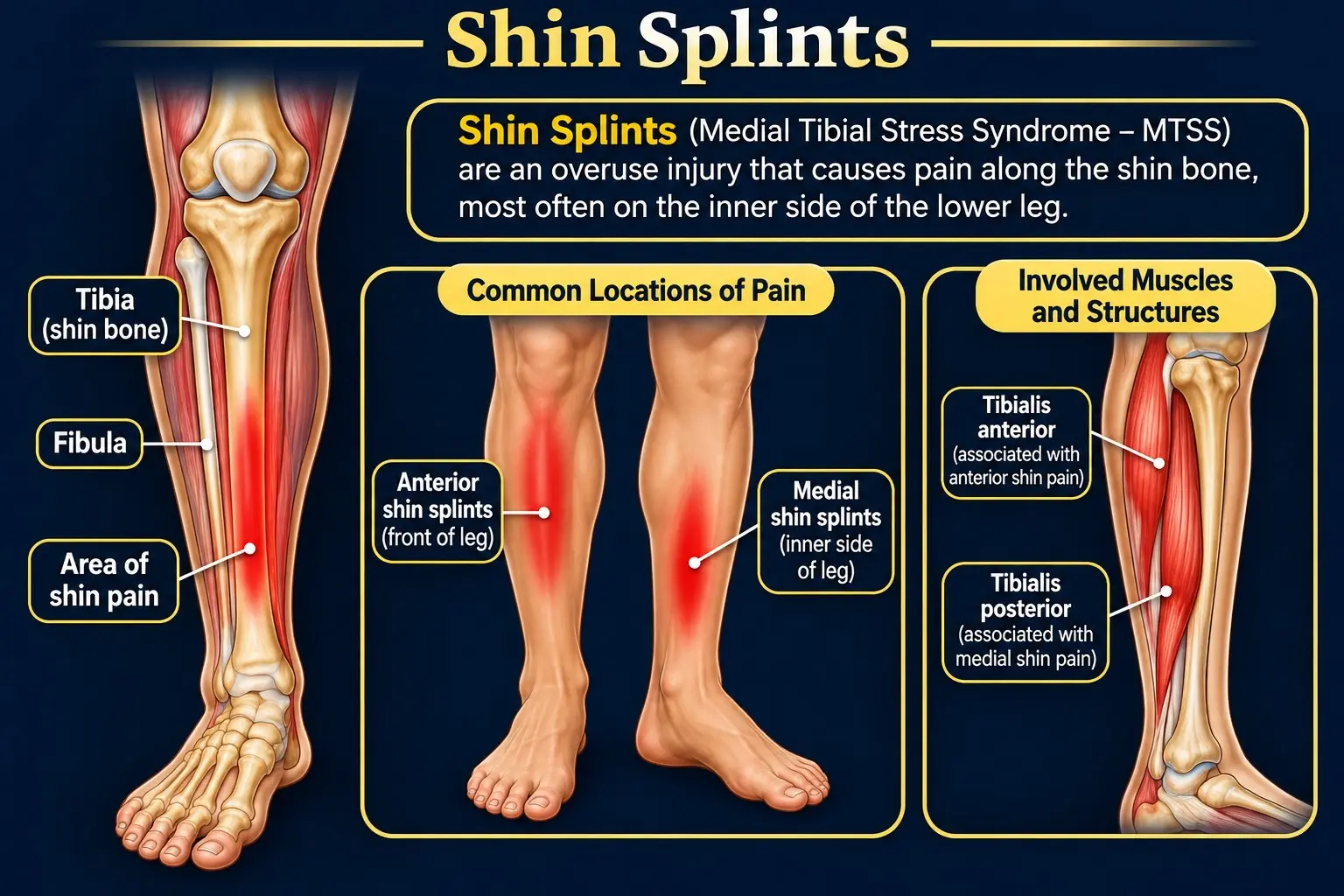
Shin splints involve structures surrounding the tibia, including muscles, tendons, bone-covering tissues, and other connective tissues. These structures support the lower leg, control foot and ankle movement, and absorb forces during walking, running, and jumping.
Several anatomical structures are relevant to shin splints:
Running, jumping, and other high-impact activities repeatedly place forces on the lower leg. When training demands increase faster than the body can adapt, these forces may contribute to shin pain.
Two important processes include:
Foot posture and movement patterns can also influence how forces travel through the lower leg. These factors may affect the stress placed on surrounding muscles and tissues in some individuals.
Shin splints do not always result from irritation of one specific muscle, tendon, or connective tissue. Multiple structures may contribute to symptoms, and the underlying process can vary between individuals.
Shin splints usually develop when repetitive physical activity places more stress on the lower leg than the tissues can handle. This often happens when training demands increase faster than the body can adapt.
Several training-related factors can contribute to shin splints:
Shin splints often develop through a combination of training demands and insufficient recovery rather than one specific cause.
Shin splints can affect people of all activity levels. However, certain sports, physical characteristics, and previous injuries are associated with a higher risk.
Certain physical characteristics and movement patterns may also increase the likelihood of shin splints:
Shin splints are commonly reported among teenagers and young adults, particularly those involved in sports or demanding physical training. Some studies also report a higher occurrence among females. These are risk associations, not guarantees that someone will develop the condition.
Shin splints typically cause pain along the inner edge of the shinbone (tibia). The discomfort may feel dull and aching, throbbing, or sometimes sharp. Symptoms often develop during or after physical activity, especially running, jumping, or other repetitive movements.
The severity and timing of symptoms can vary. Common signs of shin splints include:
Shin splint symptoms often begin as mild discomfort during exercise. At first, the pain may settle when you stop the activity or take time to rest.
If repetitive loading continues, the discomfort may become more persistent. It can eventually affect walking and other everyday activities.
Severe, worsening, or highly localized shin pain needs medical assessment. Pain at rest or at night also warrants evaluation to check for an underlying bone stress injury or another condition.
Doctors usually diagnose shin splints by reviewing your symptoms, physical activity, and medical history. They also examine your lower leg to identify the source of pain. In many cases, a physical examination provides enough information to make a diagnosis.
Your doctor will ask about your symptoms, exercise habits, and recent changes in physical activity. This helps identify possible factors contributing to lower-leg pain.
The assessment may include:
Your doctor will examine the painful area and assess how your lower leg functions. The examination may include:
Imaging tests are not always necessary to diagnose shin splints. Your doctor may recommend them when symptoms are severe, persistent, unusual, or suggest another condition.
Common imaging tests include:
Several conditions can produce symptoms similar to shin splints. Your doctor may consider these possibilities when the pain pattern or examination findings are unusual.
An accurate diagnosis helps distinguish shin splints from other causes of lower-leg pain. It also allows your doctor to recommend appropriate treatment and identify injuries that may worsen with continued exercise.
Treatment for shin splints focuses on reducing stress on the lower leg, relieving pain, and supporting recovery. Most cases improve with activity modification, appropriate rest, and gradual rehabilitation. The treatment plan depends on symptom severity and whether another injury is present.
Reducing or temporarily stopping activities that trigger shin pain gives the lower leg time to recover. You may need to avoid running, jumping, and other high-impact exercises until symptoms improve.
Complete inactivity is not always necessary. You can usually continue comfortable activities that do not aggravate your symptoms.
Applying ice can help relieve pain and reduce discomfort around the shinbone.
Over-the-counter pain relievers may help manage discomfort during recovery. Options can include nonsteroidal anti-inflammatory drugs (NSAIDs), such as ibuprofen, when appropriate.
These medications are not suitable for everyone and may cause side effects. Ask your doctor or pharmacist before using them, especially if you have other medical conditions or take regular medication.
Suitable athletic shoes can provide support and cushioning during physical activity. Replace worn-out footwear and choose shoes that fit your foot type and exercise needs.
Some people may benefit from orthotic inserts, particularly when foot mechanics contribute to lower-leg stress. A healthcare professional can help determine whether orthotics are appropriate.
Physical therapy may help improve lower-leg strength, flexibility, and movement control. A physical therapist can create a rehabilitation program based on your symptoms and recovery progress.
Rehabilitation may also address contributing factors, such as muscle weakness, limited flexibility, or movement patterns that increase stress on the lower leg.
Returning to high-impact exercise too quickly can cause symptoms to return. Resume activity gradually once your shin pain has improved and everyday movements are comfortable.
Your doctor or physical therapist can guide your return to running and other sports. Reduce your activity if pain returns, and seek medical reassessment if symptoms persist or worsen.
Exercises for shin splints focus on improving lower-leg flexibility, strengthening supporting muscles, and maintaining comfortable ankle movement. Start with gentle movements that do not increase your shin pain.
Gentle stretching can improve flexibility in the calf and lower-leg muscles. Hold each stretch without bouncing, and avoid forcing the movement.
Strengthening exercises help improve the ability of the lower-leg and hip muscles to support movement.
Ankle mobility exercises help maintain comfortable movement in the foot and ankle.
Once your symptoms have improved, you can gradually rebuild your running ability. A return-to-running program may progress through these stages:
The progression should match your recovery rather than follow a fixed schedule. If pain returns or increases, reduce the activity and allow more recovery time.
Stop any exercise that causes or increases shin pain. If you have focal bone tenderness or a suspected stress fracture, seek medical advice before starting impact exercises.
Recovery from shin splints depends on symptom severity, training modifications, and how well the lower leg responds to treatment. Many cases improve within 2 to 4 weeks with appropriate activity modification and self-care. More persistent symptoms may take several months or longer to settle.
Recovery time varies between individuals. The following estimates provide a general guide rather than fixed recovery periods:
| Symptom Severity | Possible Recovery Time | Recovery Considerations |
|---|---|---|
| Mild Symptoms | Approximately 1–3 weeks | Symptoms may improve with reduced high-impact activity and adequate recovery. |
| Moderate Symptoms | Approximately 3–8 weeks | Recovery may require longer activity modification and a structured rehabilitation program. |
| Persistent or Severe Symptoms | Several months or longer | Further assessment may be needed to check for an underlying bone stress injury or another condition. |
These estimates are not guaranteed recovery periods. A tibial stress reaction or stress fracture is a separate bone stress injury and may require a longer recovery period than typical shin splints.
Several factors can influence how quickly your symptoms improve:
Your symptoms should gradually improve as you reduce painful activities and allow enough time for recovery. Seek medical assessment if shin pain does not improve, becomes more severe, or occurs during rest or at night.
These symptoms may indicate an underlying bone stress injury or another condition that needs further evaluation. Your doctor can assess the cause and recommend appropriate treatment.
Recovery should not depend on a fixed number of weeks. Your symptoms, daily activity tolerance, and response to rehabilitation should guide your return to exercise.
You can usually consider returning to running when your shin pain has settled and everyday activities feel comfortable. Your leg should also tolerate basic strengthening and walking without symptoms.
There is no single recovery timeline that works for everyone. Mild cases may improve within a few weeks, while persistent symptoms or an underlying bone stress injury may require longer.
Before restarting running, check that you can:
If you have focal bone tenderness or a suspected stress fracture, seek medical advice before attempting impact activities. Do not use hopping or jumping tests to clear yourself for running.
Once you are ready, return gradually rather than immediately resuming your previous training routine.
The commonly mentioned 10% rule can serve as a rough training guide. However, it is not a proven safety limit or a guarantee against reinjury.
A gradual training plan can help you manage the demands placed on your lower legs.
If shin pain returns or progressively worsens, reduce your training and seek medical assessment.
Shin splints usually improve with appropriate treatment and training adjustments. However, ignoring persistent pain or continuing high-impact activities despite worsening symptoms can delay recovery.
A tibial stress reaction or stress fracture involves injury to the bone from repeated loading. Localized tenderness, worsening pain, or pain during rest may raise concern for a stress injury. Medical assessment can help distinguish it from shin splints.
Shin splints do not inevitably develop into a stress fracture. However, continuing to exercise through unexplained or worsening shin pain may delay diagnosis of an underlying bone injury.
These symptoms may indicate a different or more significant injury. Early assessment can help identify the cause and guide appropriate treatment.
You can reduce your risk of shin splints by managing training loads and allowing enough time for recovery. Proper footwear, lower-leg strengthening, and gradual changes in activity may also help.
Consistent training habits and appropriate recovery can help lower your risk of shin splints. However, no prevention method can eliminate the risk.
Running may worsen shin splints if it increases your pain. Reduce or stop painful activities until symptoms improve. Return to running gradually when walking and basic exercises no longer cause discomfort.
No. Shin splints usually cause diffuse pain along the inner edge of the shinbone. A stress fracture involves a specific area of bone injury and often causes more localized tenderness. Both conditions can produce exercise-related shin pain.
Yes. Many cases improve with reduced impact activity, appropriate recovery, and gradual rehabilitation. However, persistent or worsening pain needs medical assessment to rule out other injuries.
Ice may help reduce pain after activity. Apply a cold pack wrapped in a towel for about 15–20 minutes. Heat is not usually necessary, especially when the area is swollen or irritated.
Walking may aggravate shin splints when symptoms are severe. If walking causes pain, reduce your activity and avoid pushing through it. Pain during ordinary walking should be assessed by a healthcare professional.
No. Shin splints are usually treated without surgery. Treatment generally involves activity modification, rehabilitation, and gradual return to exercise. Surgery is rarely considered for typical shin splints.