
Specialties › Knee & Leg › Hamstring Injury

A hamstring injury is one of the most common muscle injuries. It affects the muscles and tendons at the back of the thigh. The injury can happen during sprinting, sudden acceleration, kicking, or forceful stretching. It may cause sudden pain, muscle weakness, swelling, and difficulty walking.
This article explains what hamstring injuries are and what causes them. You will learn about the different injury grades, common symptoms, how doctors diagnose them, and the available treatment options. We also cover when surgery may be necessary, how long recovery takes, whether a pulled hamstring can heal on its own, possible complications, ways to prevent another injury, and answers to common patient questions.
Book a consultation and receive expert orthopedic guidance.
A hamstring injury occurs when one or more muscles or tendons at the back of the thigh become strained or torn. It is commonly known as a pulled hamstring, hamstring strain, or torn hamstring.
The hamstring muscles help bend the knee and extend the hip. They also control leg movement during walking, running, and jumping. An injury can cause sudden pain, swelling, bruising, and muscle weakness, making walking, bending the knee, or straightening the leg difficult.
A hamstring injury can range from a mild muscle strain to a severe or complete tear. Some injuries affect the muscle fibers, while others involve the tendons that connect muscles to bone. Severe tendon injuries may require surgery, depending on the extent of the damage and the patient's symptoms and activity level.
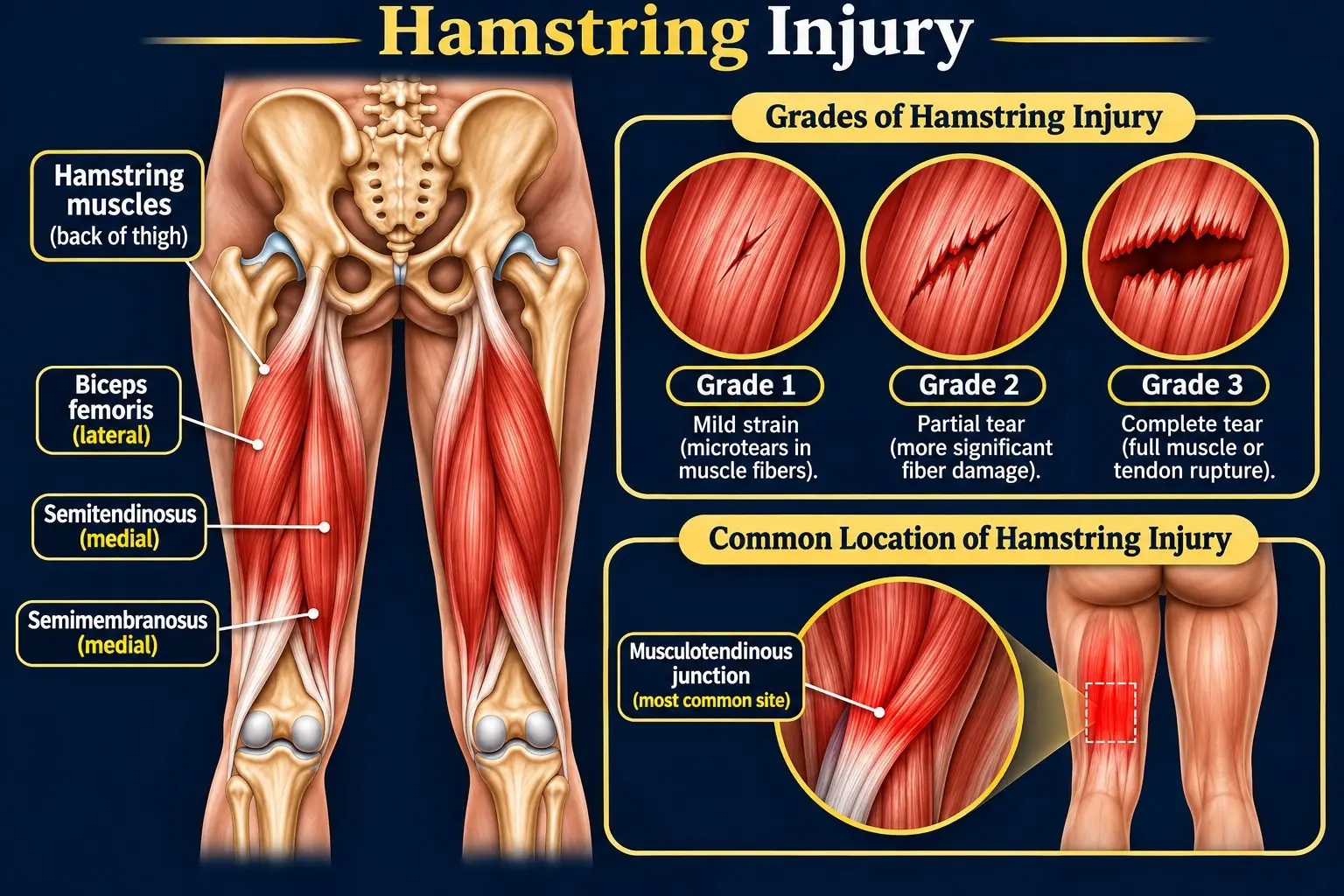
The hamstrings are a group of three muscles located at the back of the thigh. They help bend the knee, extend the hip, and control leg movement during walking, running, sprinting, and jumping. These muscles also help slow the leg during fast movements and support stability around the knee.
The three hamstring muscles work together to control movement and produce force:
Most hamstring muscles cross both the hip and knee joints. This allows them to coordinate movement between these joints during everyday activities and sports.
The hamstrings are especially important during sprinting and acceleration. They produce force to help propel the body forward and work while lengthening to slow the lower leg before the foot strikes the ground. These demanding movements place considerable stress on the muscles, which can lead to an injury when the force exceeds their capacity.
A hamstring injury often occurs when the muscles experience excessive force during sprinting, sudden acceleration, or movements that lengthen the muscle under load. These forces can overstretch the muscle fibers or cause them to tear. The injury may range from a mild strain to a severe muscle tear or tendon injury.
Common causes of hamstring injuries include:
Anyone can experience a hamstring injury, but certain factors can increase the risk. Athletes who perform explosive movements are particularly vulnerable, although hamstring strains can also occur during everyday activities.
Common hamstring injury risk factors include:
Having one or more risk factors does not mean an injury will occur. Appropriate conditioning, gradual increases in training intensity, adequate recovery, and complete rehabilitation can help reduce the risk.
Hamstring injuries are classified into three grades based on the extent of tissue damage and the effect on muscle function. The grade helps doctors assess the injury's severity and plan appropriate treatment.
A healthcare professional determines the injury grade through a physical examination and, when necessary, imaging tests such as MRI or ultrasound. Symptoms alone cannot reliably establish the full extent of tissue damage.
A hamstring injury can cause sudden pain at the back of the thigh, tenderness, swelling, and difficulty walking or bending the knee. Symptoms may appear immediately or become more noticeable over the following hours. Their severity depends on the extent of muscle or tendon damage.
Common symptoms of a hamstring injury include:
Mild hamstring strains may cause only slight pain and stiffness. Severe tears can lead to significant weakness, extensive bruising, and difficulty bearing weight. Some major tears also produce a visible change in muscle shape or a gap in the injured tissue.
A pulled hamstring often feels like a sudden pulling sensation, sharp pain, or tearing feeling at the back of the thigh. It commonly occurs during sprinting, kicking, or forceful stretching. Some people feel or hear a popping sensation when the injury happens. The pain may force you to stop the activity immediately.
The symptoms depend on the severity of the injury:
The location of the pain can also provide useful clues. Pain high near the buttock may indicate an injury involving the upper hamstring tendons, while pain in the middle of the back of the thigh may suggest damage within the muscle.
These symptoms cannot confirm the severity of the injury on their own. A healthcare professional can assess the affected area and recommend imaging when necessary to determine the extent of muscle or tendon damage.
Doctors diagnose a hamstring injury by reviewing how the injury occurred, examining the affected leg, and using imaging tests when necessary. The assessment helps identify the location of the damage, estimate its severity, and determine whether the muscle, tendon, or nearby bone is involved.
The doctor asks how and when the injury occurred. This information helps identify the likely cause and severity of the damage.
The doctor examines the back of the thigh to identify tenderness, swelling, bruising, and possible changes in muscle shape. The examination may include:
The doctor uses the medical history and physical examination to estimate the injury grade.
Symptoms alone cannot reliably establish the full extent of tissue damage. The doctor may recommend imaging if a significant tear or tendon injury is suspected.
Most mild hamstring strains do not require imaging. A doctor may recommend an imaging test when a severe tear, tendon injury, or avulsion fracture is suspected.
Doctors combine the examination findings with imaging results when needed to determine the most appropriate treatment. Not every hamstring injury requires an MRI or ultrasound.
Hamstring injury treatment focuses on protecting the injured tissue, managing pain and swelling, and gradually restoring strength and movement. The treatment plan depends on the severity of the tear, its location, the level of functional limitation, and whether a tendon is involved. Most mild strains improve with conservative care and progressive rehabilitation, while selected severe tendon injuries may require surgery.
During the first two to three days after a mild or moderate hamstring strain, protecting the injured area and managing symptoms can support recovery.
Rehabilitation helps restore hamstring strength, flexibility, coordination, and function. A physical therapist can adjust the exercises according to the injury's severity and your progress.
Following a structured rehabilitation plan can help restore function and reduce the risk of reinjury. Increasing exercise intensity too quickly may aggravate the injury.
Healthcare professionals may consider additional treatments in selected cases. Platelet-rich plasma (PRP) injections are sometimes used for hamstring injuries, but evidence of their effectiveness remains uncertain. PRP is not a routine treatment for every hamstring strain.
Most mild strains and many partial muscle tears can be treated without surgery. An orthopedic specialist may recommend surgery for certain severe tendon injuries, particularly when a hamstring tendon completely detaches from the pelvis or another attachment site.
Surgery may be considered when multiple tendons are involved or the tendons have retracted substantially. The decision depends on the extent and location of the injury, the patient's activity level, and the resulting functional limitations.
Severe muscle tears do not always require surgery. A specialist assessment helps determine whether conservative treatment or surgical repair is the most appropriate option.
Recovery varies according to the severity of the injury, tendon involvement, and progress during rehabilitation. Following the recommended treatment plan and returning to activity gradually can help restore strength and function.
Hamstring recovery time depends on the extent of tissue damage, the location of the injury, and progress during rehabilitation. Mild strains may improve within a few days to a few weeks, while severe tears and tendon injuries can take several months or longer to heal. The recovery timeline also depends on the individual's health, activity level, and response to treatment.
| Injury Grade | Typical Recovery Time | What to Expect |
|---|---|---|
| Grade 1 (Mild Strain) | A few days to a few weeks | Pain and stiffness usually improve relatively quickly, with little loss of strength. Full strength may take longer to return. |
| Grade 2 (Partial Tear) | Several weeks to a few months | Pain, swelling, bruising, and muscle weakness may take longer to resolve. Progressive rehabilitation helps restore strength and movement. |
| Grade 3 (Severe or Complete Tear) | Several months to a year or longer in some cases | Extensive muscle damage or a complete tendon rupture may require prolonged rehabilitation. Recovery can take longer after surgical repair. |
These timeframes are general estimates, not guarantees. Two people with similar injuries may recover at different rates.
Several factors can influence how quickly a hamstring injury heals:
Pain often improves before the hamstring regains its full strength and ability to tolerate demanding movements. Walking comfortably does not necessarily mean the muscle is ready for sprinting, jumping, or competitive sports.
A gradual return to activity should depend on restored strength, adequate range of motion, and the ability to perform relevant movements without significant pain. A healthcare professional or physical therapist can assess your progress and help determine when it is safe to increase activity.
Full recovery means more than relief from pain. The goal is to restore enough strength and function for everyday activities, work, and sports while reducing the risk of reinjury. Follow your rehabilitation plan and avoid rushing back to demanding activities before the hamstring is ready.
A hamstring strain and a hamstring tear describe related injuries affecting the muscles at the back of the thigh. The terms can overlap because a strain may involve overstretched muscle fibers or small tears, while more severe injuries can involve extensive muscle damage or a complete tear. The extent of tissue damage helps determine the symptoms, functional limitations, and treatment required.
| Feature | Hamstring Strain | Hamstring Tear |
|---|---|---|
| Tissue Damage | May involve overstretched muscle fibers or small tears. More severe strains can cause greater tissue damage. | Involves torn muscle fibers or more substantial damage. Tears can be partial or complete and may affect a tendon. |
| Common Symptoms | Mild to moderate pain, tightness, tenderness, and sometimes swelling or bruising. | May cause sudden, severe pain, noticeable swelling, bruising, muscle weakness, or a popping sensation. |
| Functional Limitations | Walking and everyday activities may remain possible, although some movements can cause discomfort. | Walking, bending the knee, or bearing weight may become difficult, particularly with extensive tears. |
| Typical Treatment | Mild injuries often improve with activity modification, symptom management, and progressive rehabilitation. | More extensive tears may require crutches, structured physical therapy, imaging, or assessment by an orthopedic specialist. Some complete tendon tears require surgery. |
These terms are not always used as separate diagnostic categories. A strain can involve torn muscle fibers, and a tear does not automatically mean surgery is necessary. Treatment depends on the extent and location of the damage, the effect on movement, and whether a tendon is involved.
Most hamstring injuries improve with appropriate treatment and rehabilitation. Some people experience complications, especially after severe tears, incomplete rehabilitation, or an early return to demanding activities. These problems can affect muscle strength, flexibility, and the ability to perform everyday activities or sports.
Severe tendon tears or avulsion injuries sometimes require surgery to reattach the tendon. Although surgical repair can restore function in selected patients, it carries potential risks.
Possible complications include:
Following a structured rehabilitation program helps restore strength, flexibility, and movement control. Avoid returning to demanding activities before the hamstring has recovered sufficiently. Seek medical assessment if pain persists, weakness worsens, or you develop new numbness or tingling.
Complications are not inevitable. Appropriate treatment, progressive rehabilitation, and a gradual return to activity can improve recovery and help reduce the risk of reinjury.
Preventing another hamstring injury requires targeted strengthening, appropriate warm-ups, gradual increases in training intensity, and adequate recovery. A previous hamstring injury can increase the risk of reinjury, so restoring strength and function before returning to demanding activities is especially important.
Combining targeted strengthening, sensible training progression, adequate recovery, and complete rehabilitation can reduce the risk of another hamstring injury. No prevention program can eliminate every injury, but consistent preparation can help protect the hamstrings during everyday activities and sports.
Gentle walking may be suitable for a mild hamstring injury if it does not increase pain or cause limping. Avoid pushing through discomfort or placing excessive weight on the injured leg. Severe pain, difficulty walking, or difficulty bearing weight warrants medical assessment.
Ice may help relieve pain and swelling during the early stages of a hamstring injury. Wrap the ice pack in a cloth and apply it for 15–20 minutes at a time. Heat may be appropriate later in some cases, but avoid extreme temperatures and seek professional advice if symptoms persist.
Avoid forceful massage immediately after a hamstring injury, as it may aggravate damaged muscle fibers and increase discomfort. Protect the injured area during the early stages and consult a healthcare professional before introducing massage or other manual therapies, particularly if you suspect a severe tear.
Many mild hamstring strains improve with appropriate self-care and gradual rehabilitation. More severe tears and tendon injuries may require medical treatment or surgery. Even when pain improves, restoring muscle strength and function remains important to reduce the risk of reinjury.
A proximal hamstring injury affects the upper hamstring muscles or tendons near their attachment to the sitting bone, called the ischial tuberosity. It can cause pain near the buttock, especially when sitting. Severe tendon injuries may involve tendon detachment and require specialist assessment.
For a suspected mild hamstring strain, stop activities that cause pain, protect the injured leg, and apply ice wrapped in a cloth for short periods. Compression and elevation may help manage swelling. Avoid aggressive stretching and seek medical assessment if pain is severe or walking is difficult.
You can return to sports when pain, strength, range of motion, and functional movement have recovered sufficiently. Rehabilitation should progress gradually from walking and running to sprinting and sport-specific drills. A healthcare professional or physical therapist can assess readiness and help reduce the risk of reinjury.